


-
BlackRock filed amendments for its iShares Bitcoin (IBIT) and Ethereum (ETHA) ETFs, aligning them with the SEC’s new generic listing standards set to take effect in Q1 2026, streamlining regulatory compliance and accelerating ETF approvals.
-
BlackRock’s Bitcoin ETF has overtaken Deribit as the largest BTC options venue, with open interest reaching nearly $38 billion, marking a major milestone in Wall Street’s growing dominance of crypto markets.
BlackRock is making strategic adjustments to its flagship crypto products, filing amendments with the U.S. Securities and Exchange Commission (SEC) for its iShares Bitcoin ETF (IBIT) and iShares Ethereum ETF (ETHA).
The move comes at a landmark moment for the asset manager, as its Bitcoin ETF has surpassed leading crypto derivatives exchange Deribit to become the top venue for BTC options.
BlackRock Amends IBIT and ETHA
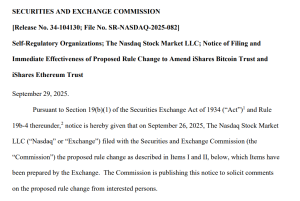
In a filing dated September 29, BlackRock confirmed that both IBIT and ETHA will transition to operate under the SEC’s newly approved generic listing standards. The changes, set to take effect in Q1 2026, will allow the funds to comply with a standardized framework rather than the bespoke conditions outlined in their original filings.
Nasdaq, which lists the funds, also requested the SEC to waive the standard five-day notice period for such amendments, ensuring immediate effectiveness.
The shift to generic standards reflects a broader regulatory evolution. From October 1, exchanges such as Nasdaq, NYSE, and Cboe can list and trade commodity-based trust shares—including those tied to digital assets, without the lengthy 240-day review process under the Securities Act of 1933.
Instead, the approval timeline is shortened to just 75 days, streamlining access to crypto ETFs for investors.
Broader Market Movement
BlackRock is not alone in adapting to the new framework. On Friday, Cboe BZX Exchange also submitted filings to align products from Fidelity, VanEck, and 21Shares with the generic listing standards.
Meanwhile, the SEC has withdrawn prior delay notices on ETF applications tied to Solana, XRP, HBAR, and Litecoin, signaling accelerated progress toward the first wave of altcoin ETFs under the updated rules.
This regulatory streamlining is widely seen as a pivotal moment for the crypto ETF market, lowering barriers for issuers and paving the way for broader institutional adoption.
IBIT Surpasses Deribit in BTC Options
The amendments coincide with a major milestone for BlackRock’s Bitcoin ETF. According to Bloomberg, IBIT recently overtook Deribit to become the largest platform for BTC options trading. The leap was made possible after the SEC approved options on IBIT earlier this year, giving Wall Street investors a regulated venue for Bitcoin derivatives.
Following last Friday’s $23 billion crypto options expiry, open interest on IBIT surged to nearly $38 billion, compared to $32 billion on Deribit. The development highlights how traditional financial products are rapidly displacing crypto-native exchanges in areas once considered their stronghold.
With $87.71 billion in assets under management, BlackRock’s Bitcoin ETF is now the largest in the world, reinforcing the financial giant’s dominance in the digital asset sector. Ethereum products could be next in line for similar breakthroughs, as the market awaits the SEC’s decision on allowing staking within spot ETH ETFs.
As Bitcoin trades above $114,100, BlackRock’s filings underscore both the regulatory momentum and institutional appetite shaping the future of crypto investment products.