





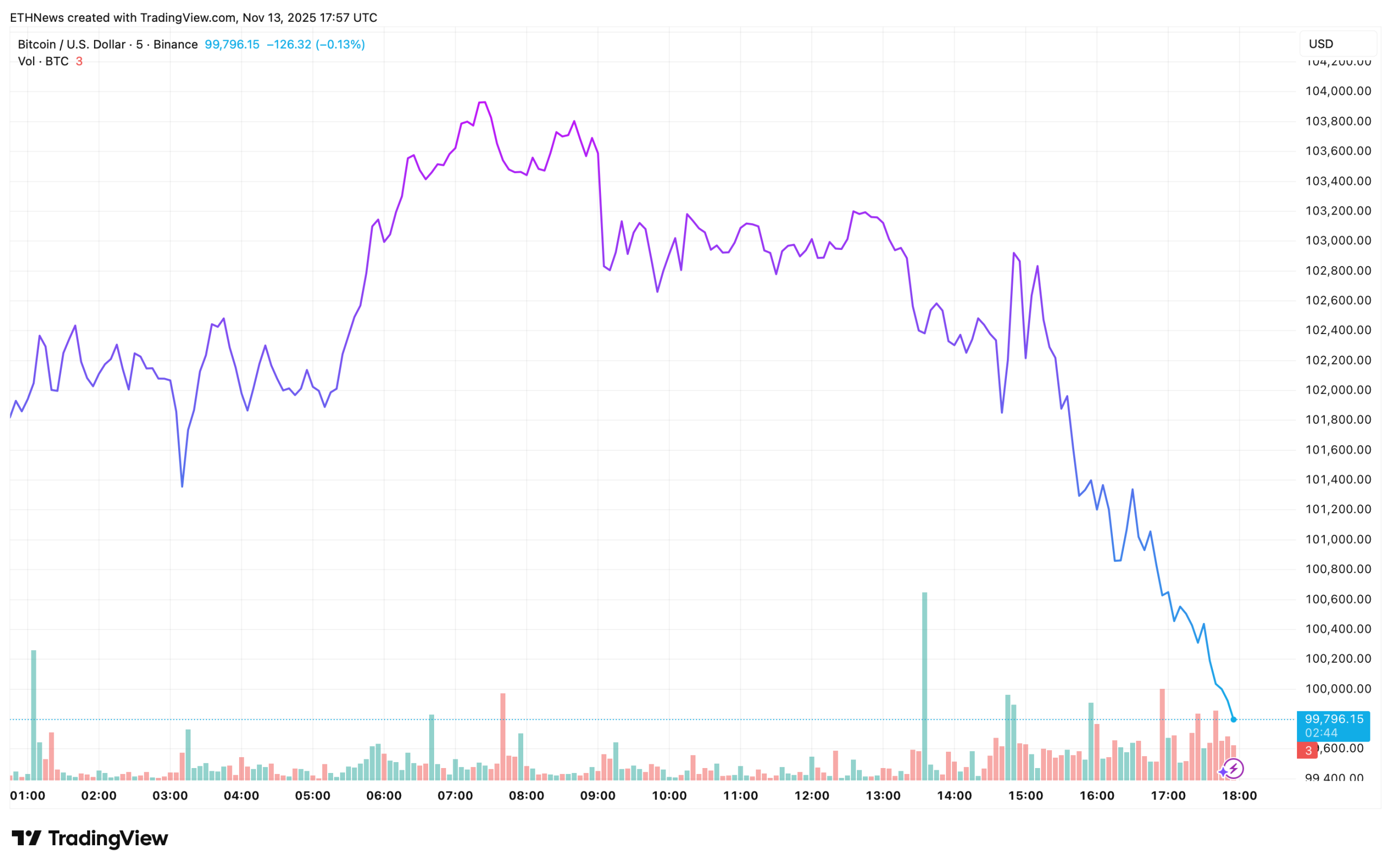
Bitcoin slipped below the psychological $100,000 level on November 13, falling toward the mid-$99,000 range as volatility intensified during U.S. trading hours. The drawdown capped a difficult week for the broader crypto market, with Bitcoin down nearly 2% over seven days and its market cap retreating to $1.98 trillion.
A deeper look at macroeconomic shifts, risk-asset pressure, and liquidity trends suggests that this decline is less about crypto-specific news and more about global market sentiment tightening at the worst possible moment.
Macro Forces Apply Pressure on Bitcoin
The sharpest driver behind Bitcoin’s dip is the sudden shift in U.S. interest-rate expectations. A month ago, markets were pricing a 95% probability of a Federal Reserve rate cut in December. That probability has now collapsed into the 47%–52% range, according to CME FedWatch data.
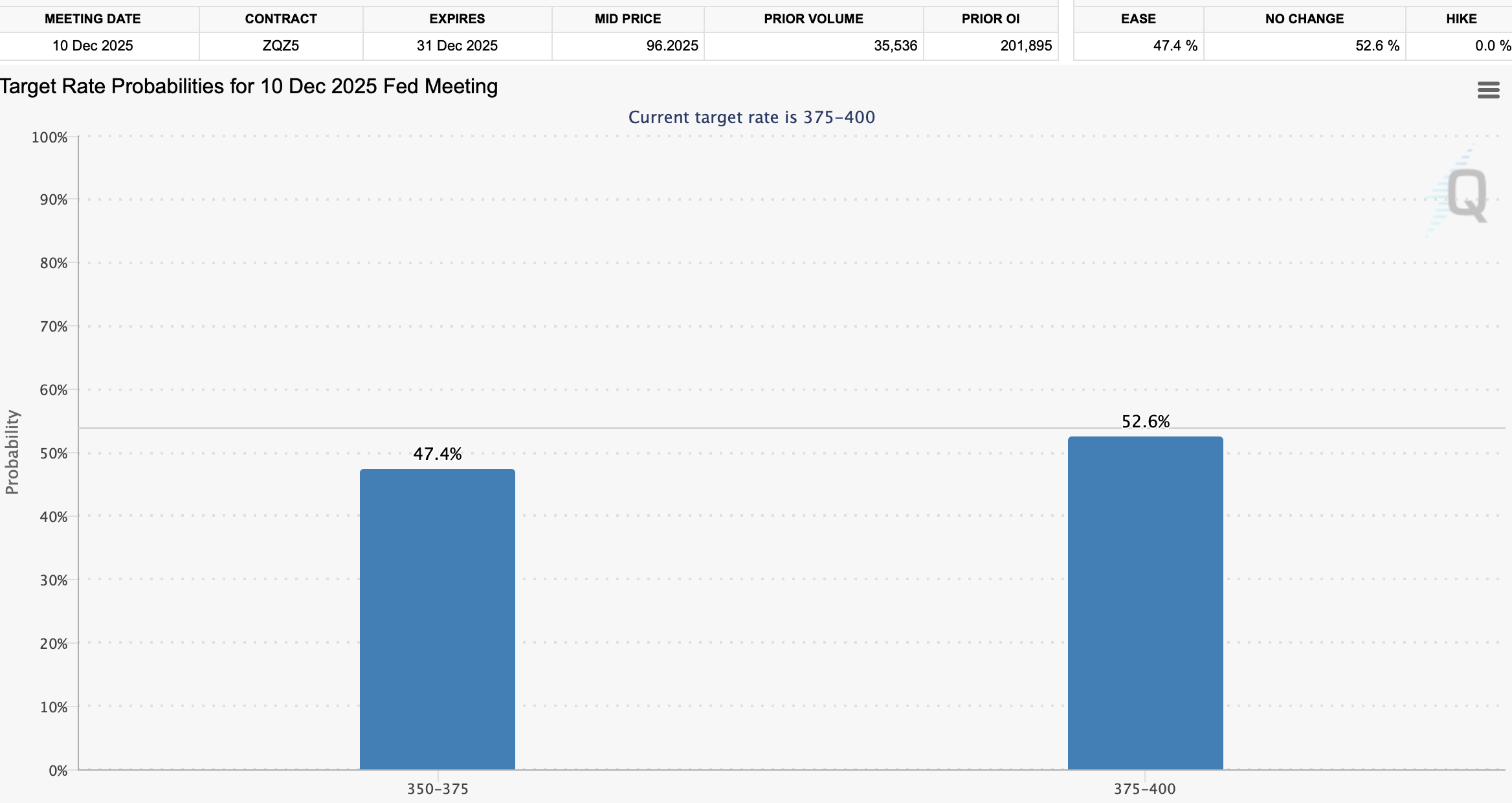
This abrupt repricing has strengthened the U.S. dollar, lifted Treasury yields, and drained risk appetite across equities and crypto. Since Bitcoin’s 90-day correlation with the S&P 500 has risen to 0.72, the index’s downturn is directly feeding into BTC price action.
The Nasdaq’s 2% decline on November 13 perfectly overlapped with Bitcoin’s steepest intraday slide, a strong signal that macro-driven risk aversion is steering the selloff far more than crypto-native events.
With rate cuts becoming less certain, traders are reassessing high-beta assets, prompting wider outflows from leveraged positions and driving BTC’s retracement under $100K.
Liquidity Data Shows Fading Spot Demand
Beyond macro pressure, on-chain data also reveals a cooling in Bitcoin’s underlying demand. CryptoQuant’s latest indicators show a notably weak Bull Score Index, signaling that spot accumulation has slowed substantially while stablecoin liquidity growth has softened.
This reduction in fresh capital coincides with declining exchange balances, which—although bullish long-term, reduce immediate buying power during stress periods. Without robust spot demand, even modest macro shocks have exaggerated impact on price.
In parallel, derivatives markets show lightening open interest and thinning bid liquidity near $100K, amplifying downside wicks when volatility spikes.
Market Structure Breaks Down Below Key Levels
The near-term technical picture mirrors the fundamental weakness. Multiple analysts have highlighted a breakdown in Bitcoin’s ascending structure, with BTC failing to reclaim $103K–$105K resistance and losing momentum around the 365-day SMA, a level historically associated with major rallies.
The TradingView chart of intraday action shows a consistent pattern: minor recoveries met with strong sell pressure, followed by accelerated declines into the U.S. session. By the late trading hours, volume spiked as BTC slid sharply toward $99,700, confirming that sellers remained firmly in control.
If Bitcoin cannot reclaim the $100K–$101K range soon, analysts are watching support around $96K–$97K, where large buy liquidity clusters have appeared in heatmap data.
What Comes Next for Bitcoin?
The next key moment arrives on November 15, when U.S. inflation data (CPI) is released. A hotter-than-expected reading would likely push expectations for rate cuts further into 2026, applying more pressure on Bitcoin and other risk assets.
But if CPI cools, market sentiment could flip quickly, especially with Bitcoin now sitting near historically strong psychological support. Previous dips into this area have sparked aggressive accumulation from both institutional desks and long-term holders.
For now, Bitcoin’s drop below $100,000 is not an isolated crypto event. It is the product of macro tightening, shifting liquidity conditions, and a fragile technical structure, all converging in a single week.
Whether BTC stabilizes or revisits deeper support will largely depend on the macro data arriving in the next 48 hours.



