





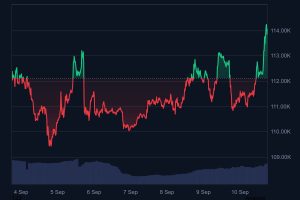
Bitcoin (BTC) surged above $114,000 for the first time since August 24, extending its recovery as fresh U.S. inflation data strengthened bets on a Federal Reserve rate cut next month. The August Producer Price Index (PPI) report showed inflation cooling much faster than expected, giving traders confidence that monetary easing may arrive sooner than previously thought.
Inflation Cools Sharply
According to the U.S. Labor Department, headline PPI fell to 2.6% year-over-year, well below forecasts of 3.3%. Core PPI, which excludes food and energy, dropped to 2.8% compared to expectations of 3.5%.
On a monthly basis, PPI even turned negative, marking only the second contraction since March 2024, according to the Kobeissi newsletter.
Adding to the dovish tone, July’s PPI figures were revised downward, with headline inflation adjusted to 3.1% from 3.4% and core PPI to 3.4% from 3.7%. Combined with this week’s historic U.S. jobs revision , which erased 911,000 positions from the past year, markets now see a September rate cut as highly probable.
Market analyst Skew noted that PPI typically lags behind the Consumer Price Index (CPI) by one to three months. While sticky CPI readings could still appear, the broader trajectory suggests inflation is cooling into Q4. Traders, however, remain cautious until CPI data confirms the trend.
CPI tomorrow
Something to keep in mind with producer reports aka PPI, there's a 1 – 3 month lag
so i wouldn't be surprised to see some hedge flows later assuming that CPI will be sticky still for aug
however, looking forward its likely that inflationary pressures are to… https://t.co/R4hC2wkijv
— Skew Δ (@52kskew) September 10, 2025
Bitcoin Reacts to Fed Expectations
The cooling inflation figures fueled Bitcoin’s breakout, with BTC touching $114,000 before easing slightly to $113,967 at press time. Historically, Bitcoin has shown a consistent pattern of turbulence during Fed rate cuts, followed by strong upside once liquidity begins to flow.
On-chain data provides further insights into these dynamics. The Market Value to Realized Value (MVRV) ratio, which compares Bitcoin’s market capitalization to its realized capitalization, often signals periods of undervaluation when near 1 and overheated conditions around 3–4.
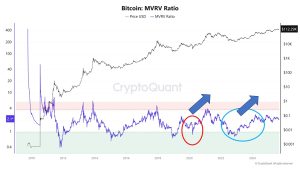
The Whale Ratio, measuring the share of large holders’ activity in exchange flows, highlights whether whales are selling coins or accumulating. Data from CryptoQuant shows that in March 2020, the Fed’s emergency rate cuts triggered a collapse in MVRV as panic selling took hold, while the Whale Ratio spiked.
However, as liquidity returned, both metrics stabilized, fueling Bitcoin’s rally to record highs in 2020–2021.
A similar pattern emerged during the 2024 easing cycle, where initial volatility gave way to another sustained bull run.
Outlook for 2025
If history repeats, a Fed rate cut in September could spark short-term turbulence as traders adjust positions. Yet, over the longer term, easing monetary policy could provide the liquidity backdrop for Bitcoin to push beyond its recent highs and potentially set new records.
For now, Bitcoin’s breakout above $114,000 underscores growing investor optimism that cooling inflation will allow the Federal Reserve to shift from tightening to easing, a development that has historically served as a powerful tailwind for BTC.



