




On-chain data from Glassnode shows a sharp rise in unrealized losses across the cryptocurrency market, signaling growing stress beneath the surface of price action.
According to the chart, total unrealized losses across crypto have climbed to roughly $350 billion, with Bitcoin alone accounting for around $85 billion of that figure.
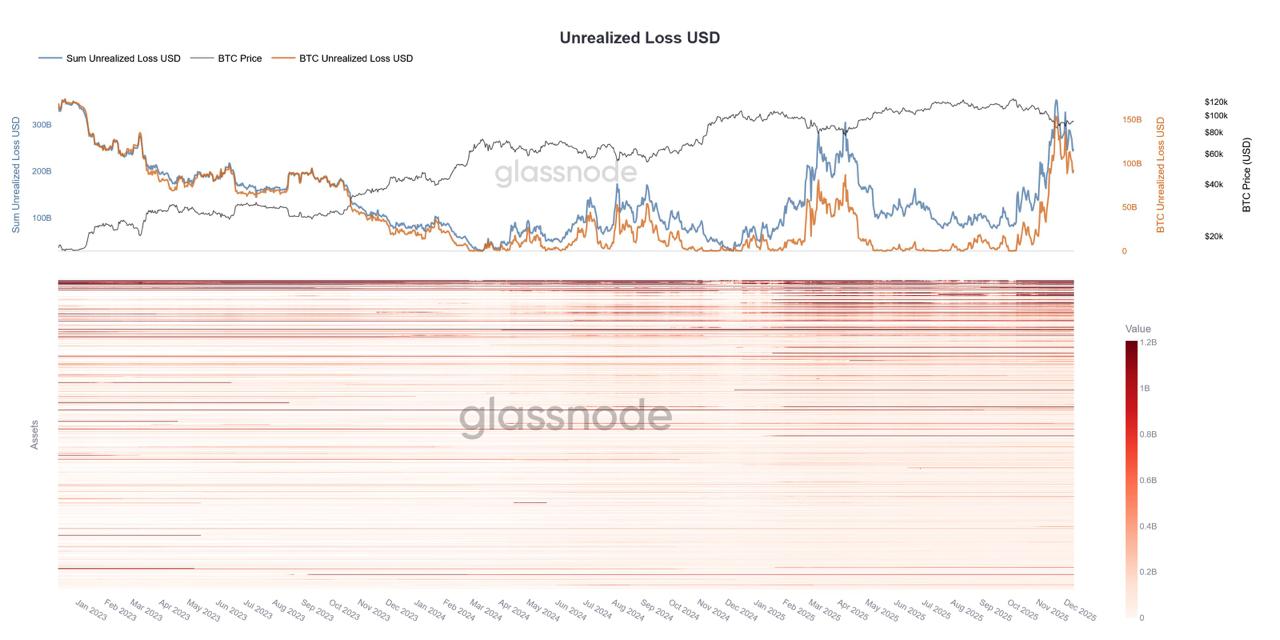
The visualization tracks unrealized losses over time alongside Bitcoin’s price, highlighting how losses have expanded during recent market weakness. The upper portion of the chart shows Bitcoin’s price movements, while the lower heatmap illustrates unrealized losses distributed across assets.
As prices declined, the intensity and density of unrealized losses increased, suggesting that a growing share of market participants are holding positions below their cost basis.
A key takeaway from the chart is the synchronization between falling prices and expanding unrealized losses, particularly during periods of declining liquidity. The data suggests that as liquidity tightens, price moves have a stronger negative impact on holder profitability. This dynamic is visible in the recent surge of losses even without a sharp, single-day capitulation event.
Bitcoin’s unrealized losses, shown separately on the chart, have risen in tandem with broader market losses.
While Bitcoin remains structurally stronger than many altcoins, the data indicates that it is not insulated from liquidity-driven stress. The expansion of unrealized losses reflects prolonged downside pressure rather than a brief volatility spike.
The heatmap further reinforces this view. Losses are spread across a wide range of assets rather than being isolated to a single sector, pointing to systemic strain rather than asset-specific weakness. This pattern aligns with periods where capital becomes more selective and market depth thins, amplifying drawdowns.
Overall, the chart suggests that shrinking liquidity is weighing heavily on market participants. With unrealized losses nearing historical extremes, the data highlights a market environment defined less by euphoria and more by endurance, as holders wait for conditions to improve before profitability can recover.



