

The odds of a September rate cut just took a major hit. After months of anticipation, traders are quickly dialing back their expectations for the Federal Reserve to ease monetary policy, following the release of hotter-than-expected PCE inflation data, widely considered the Fed’s preferred measure of inflation.
According to the latest data from the Bureau of Economic Analysis, the Personal Consumption Expenditures (PCE) index rose 2.6% year-on-year in June, exceeding analyst expectations of 2.5%. Core PCE, which strips out volatile food and energy prices, also came in higher at 2.8%, up from the expected 2.7%.
Monthly PCE and Core PCE were both in line at 0.3%, but the overall trend is clear: inflation is not cooling as fast as markets or policymakers would like.
This inflation persistence has significantly changed market sentiment. The CME FedWatch tool now shows only a 39.2% chance of a 25-basis-point rate cut in September, down sharply from 63.7% just a day earlier.
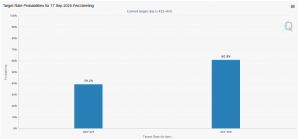
Conversely, the probability that the Federal Open Market Committee (FOMC) holds rates steady has risen to 60.8%. If the Fed does keep rates unchanged, it would mark the sixth straight meeting without a rate cut, maintaining the target range between 4.25% and 4.5%.
The latest inflation figures follow the Fed’s decision this week to hold interest rates unchanged at the July FOMC meeting. This move was widely anticipated, but Fed Chair Jerome Powell’s comments during the post-meeting press conference signaled ongoing caution.
He emphasized that while tariffs, particularly those stemming from Trump-era trade policies, are pushing inflation higher, the full impact may not be known in time to justify a September cut.
Adding fuel to the fire, former President Donald Trump lashed out at Powell in a fiery Truth Social post, calling him
TOO LATE, TOO ANGRY, TOO STUPID, & TOO POLITICAL” to serve as Fed Chair.
Trump accused Powell of delaying necessary action and costing the U.S. economy trillions, while also slamming the Fed’s internal management, calling it one of the “most incompetent or corrupt renovations of a building(s) in history.”
Despite political pressure, the Fed appears to be standing firm. With inflation stubbornly above its 2% target, policymakers are likely to wait for clearer signals before adjusting rates. Unless upcoming data shows a dramatic softening of inflation or labor markets, a September rate cut now seems increasingly unlikely.
In short: the Fed may be hitting the brakes on easing policy, again. Markets and politicians may be impatient, but the red-hot PCE numbers make it hard for Powell and company to justify moving forward with cuts just yet.