






Stablecoin usage on Ethereum has reached one of the highest levels ever recorded, according to new on-chain data shared by CryptoQuant.
Active ERC-20 stablecoin addresses climbed close to 590,000 daily users, matching or slightly exceeding previous all-time highs and marking a clear shift in how capital is moving across the crypto market.
Stablecoin Usage Expands Beyond Past Cycles
The charts show that today’s activity is not just another short-term spike. In previous market cycles, stablecoin address growth tended to surge briefly and then fade. This time, activity remains sustained well above historical norms, suggesting a structural change rather than a cyclical burst.
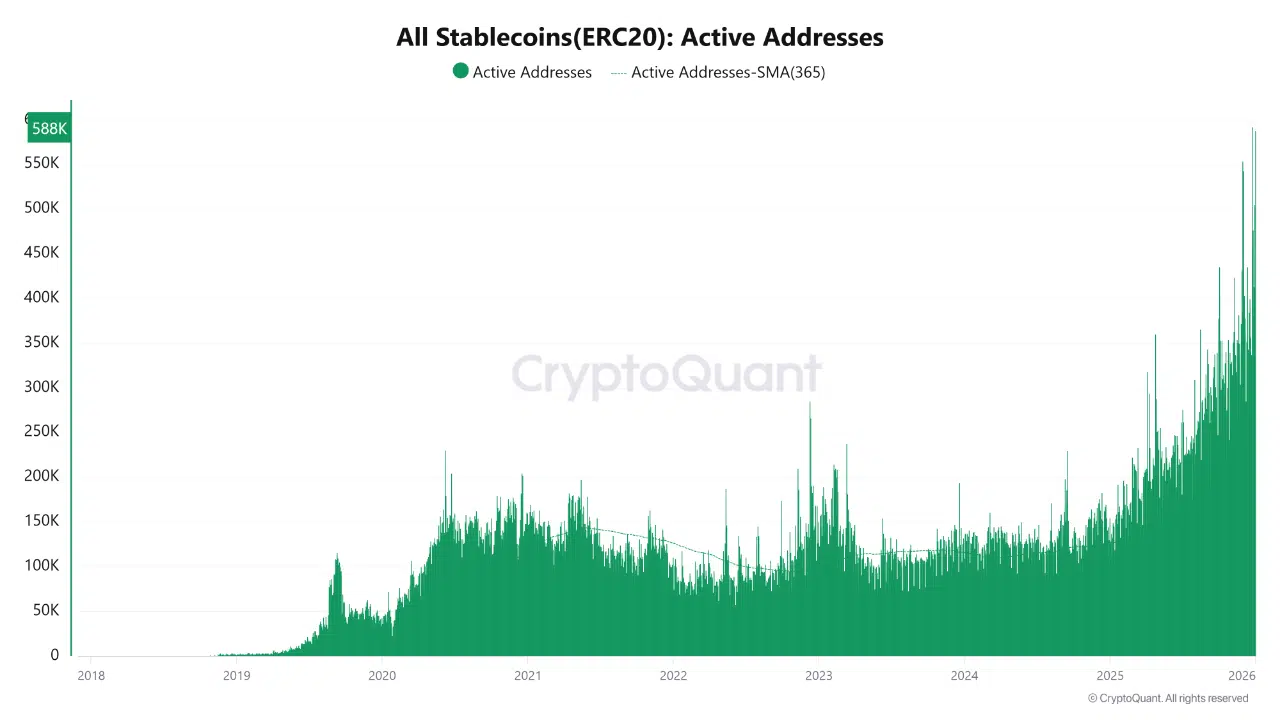
For comparison, during the 2022 stress period linked to FTX-related deleveraging, stablecoin active addresses peaked near 285,000. During the 2020–2021 bull cycle, activity rarely held above 230,000. Current levels are more than double the 2022 peak and nearly triple early expansion-phase readings.
Long-Term Trend Confirms Structural Growth
The long-term chart reinforces this shift. The 365-day moving average for ERC-20 stablecoin activity now sits above 240,000, a level that prior cycles failed to sustain. Unlike earlier rallies that reverted back toward the mean, current usage remains consistently elevated, signaling that stablecoins are now embedded deeper into everyday on-chain activity.
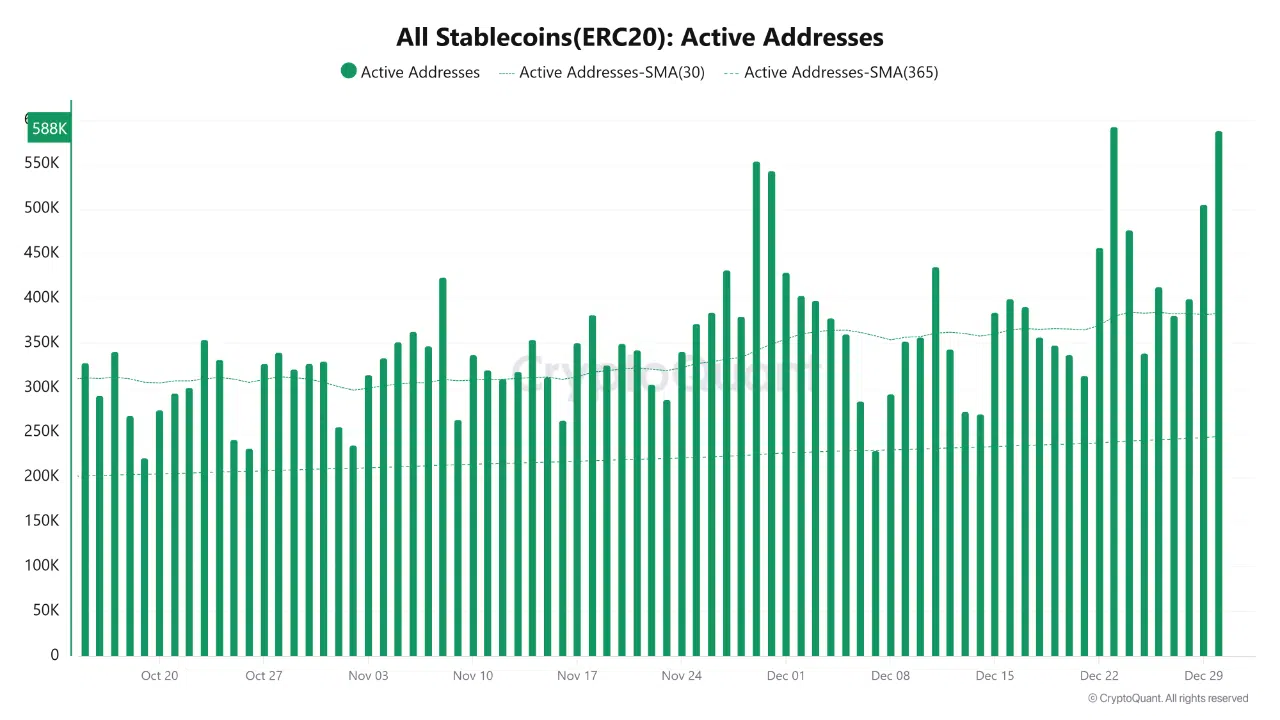
This indicates that stablecoins are no longer used primarily as idle capital parked on Ethereum. Instead, they are increasingly deployed for transfers, settlement, positioning, and liquidity management across the network.
What This Signals for the Market
According to the CryptoQuant report, this behavior reflects a market where capital remains highly mobile and actively positioned on-chain. Stablecoins are functioning as transactional liquidity rather than speculative sidelining. Historically, similar conditions have aligned more closely with accumulation or transition phases, not market tops.
As long as active address counts remain elevated and avoid sharp contractions, the data points to structural liquidity strength, not speculative excess. This suggests the market is preparing, with capital staying liquid and ready, rather than overheating.



