


U.S. labor market momentum slowed at the end of 2025, with job growth remaining subdued and the unemployment rate holding steady. The latest data point to a cooling employment backdrop after a markedly softer year compared with 2024.
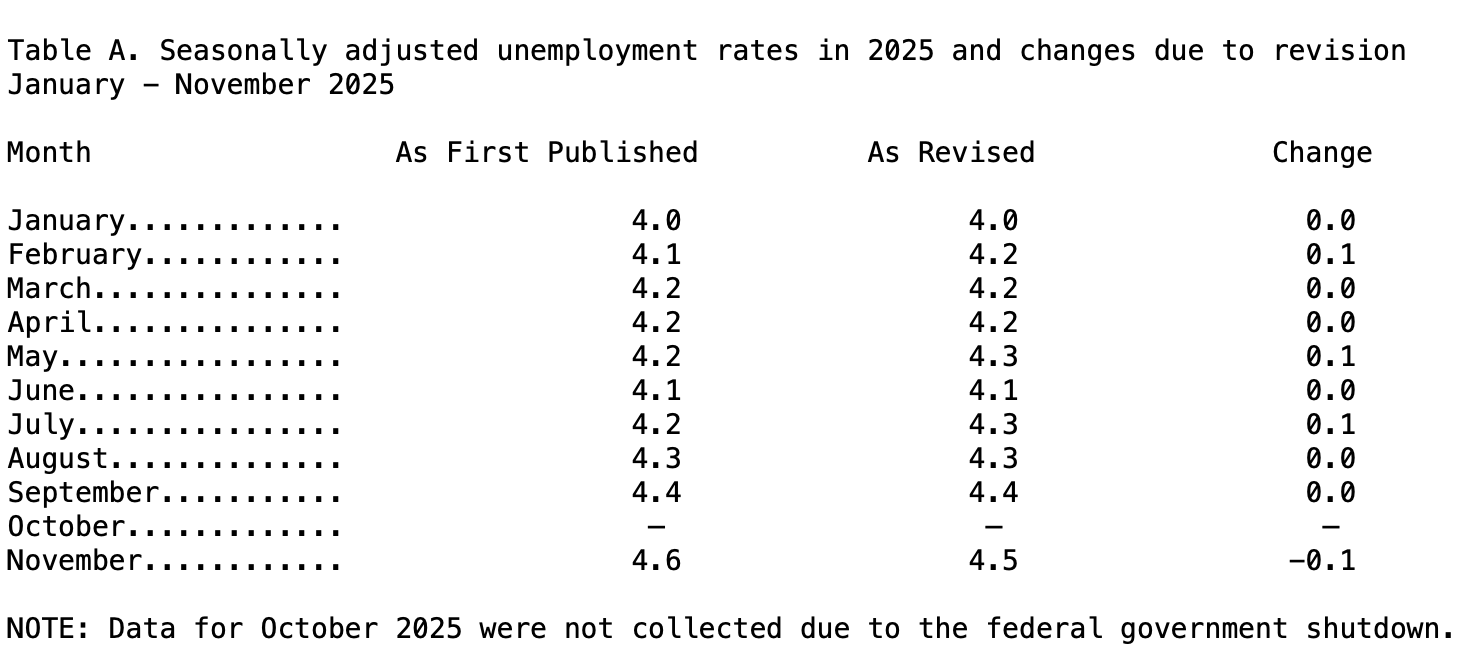
According to the December Employment Situation report released Friday by the U.S. Bureau of Labor Statistics, total nonfarm payroll employment increased by 50,000 in December. The unemployment rate was unchanged at 4.4%, with 7.5 million people classified as unemployed. Both figures showed little change from November.
Hiring Concentrated in Services
Job gains remained narrowly focused. Food services and drinking places added 27,000 positions, continuing a steady upward trend seen throughout the year. Health care employment rose by 21,000, including 16,000 new jobs in hospitals. Social assistance added another 17,000 roles, largely within individual and family services.
Elsewhere, hiring was muted. Most major industries, including manufacturing, construction, professional services, financial activities, and transportation, showed little or no net change over the month.
Retail trade stood out on the downside, shedding 25,000 jobs in December. Losses were concentrated in warehouse clubs, supercenters, and general merchandise retailers, as well as food and beverage stores. Electronics and appliance retailers posted a modest gain of 5,000 jobs.
Labor Market Metrics Largely Flat
Key participation indicators remained stable. The labor force participation rate held at 62.4%, while the employment-population ratio stayed at 59.7%. Both measures have shown little movement over the past year.
Longer-term labor stress continued to build beneath the surface. The number of long-term unemployed—those jobless for 27 weeks or more, stood at 1.9 million in December, up by 397,000 over the year. They accounted for 26.0% of total unemployment.
Part-time employment for economic reasons remained elevated at 5.3 million, nearly 1 million higher than a year earlier. The number of people outside the labor force who want a job rose to 6.2 million, also higher on a year-over-year basis.
Slower Wage and Hours Growth
Average hourly earnings for private-sector workers rose by 12 cents, or 0.3%, to $37.02 in December. Over the past 12 months, wages increased by 3.8%. For production and nonsupervisory employees, average hourly earnings were $31.76, little changed during the month.
The average workweek edged down slightly to 34.2 hours. Manufacturing hours slipped to 39.9 hours, while overtime remained unchanged.
A Weaker Year Overall
Payroll employment rose by 584,000 in 2025, averaging 49,000 jobs per month. That compares with a gain of 2.0 million jobs in 2024, when monthly growth averaged 168,000. Revisions to October and November data lowered previously reported payroll levels by a combined 76,000 jobs.
The next Employment Situation report, covering January data, is scheduled for release on February 6, 2026.