




Tron is the second largest stablecoin network by market cap, with over $85 billion in USDT hosted on the chain, according to Token Terminal data as of March 3, 2026.
The data puts that number in stark visual context against every other blockchain competing in the same space.
What the Bar Chart Actually Shows
The Token Terminal visualization ranks stablecoin market cap by chain as of March 3, 2026. Two bars dominate everything else. The dark red bar on the far right represents Ethereum, sitting just above $180 billion in stablecoin market cap. The bright red bar immediately to its left is Tron, at approximately $85 billion. Every other chain in the chart, Solana, BNB Chain, Arbitrum One, Base, Polygon, Plasma, Avalanche, and Aptos, is barely visible at the scale required to show Ethereum and Tron together.
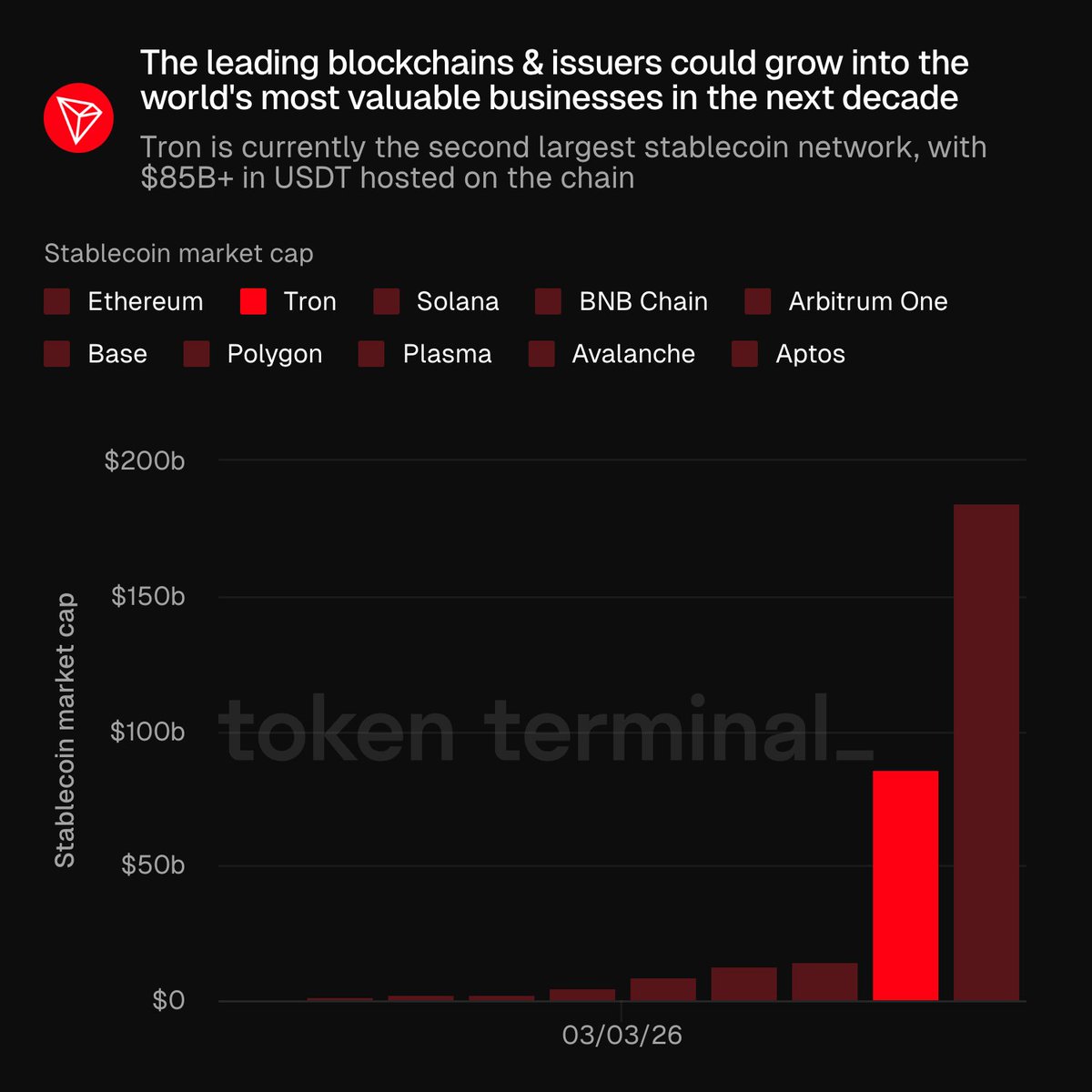
That is not a close race for second place. Solana, which generated $650 billion in adjusted stablecoin transaction volume in February according to today’s earlier Grayscale data, holds a fraction of Tron’s stablecoin market cap. Volume and supply are different metrics, and Tron’s dominance is in supply, the total dollar value of stablecoins sitting on the chain at any given moment.
Why Tron Has $85 Billion and Most People Ignore It
Tron built its stablecoin dominance almost entirely on USDT transfers in markets where transaction cost is the primary consideration. The chain is fast, cheap, and has been the dominant rail for Tether movement in Asia, the Middle East, and parts of Latin America for years. Traders and businesses in those regions moving USDT between exchanges, wallets, and counterparties have defaulted to Tron because the fees are negligible and the infrastructure is reliable.
That use case is unglamorous. It does not generate the DeFi narrative that Ethereum carries or the developer ecosystem story that Solana tells. It generates volume and supply figures that most Western crypto media ignores because the activity is largely invisible, peer-to-peer USDT transfers rather than on-chain protocol interactions that generate headlines.
The result is a network that hosts $85 billion in stablecoins with almost no cultural presence in the conversations happening today about stablecoin legislation, yield models, and tokenization infrastructure. Tron is not part of the GENIUS Act debate in any visible way. It is not the chain Bridge chose for USDsui. It is not the network Grayscale highlighted in its February breakout report. And yet by the metric that arguably matters most for stablecoin infrastructure, total supply hosted, it is second only to Ethereum globally.
The Decade Thesis
Token Terminal’s framing is that leading blockchains and issuers could grow into the world’s most valuable businesses over the next decade. That thesis rests on the tokenization of money and capital markets expanding the addressable market for on-chain stablecoin infrastructure from hundreds of billions to potentially tens of trillions.
If that expansion happens, the chains with the existing supply dominance have a structural advantage. Ethereum and Tron have network effects, established integrations, and proven reliability at scale. Challengers like Solana are growing fast in volume but remain far behind in supply. Newer chains like Base, Aptos, and Avalanche barely register in the current supply data.
The open question is whether supply leadership in 2026 predicts leadership in 2030 and beyond. In technology markets, incumbents with network effects tend to persist longer than disruption narratives suggest. They also get disrupted more completely when they do fall. Tron’s $85 billion in USDT supply is a moat. Whether it is durable depends on whether the next wave of stablecoin growth flows to existing rails or builds new ones.
That question does not have a 2026 answer. It has a decade-long answer, which is precisely the timeframe Token Terminal is pointing at.



