



- Zcash released version 6.12.2 to fix critical consensus bugs that could have caused zcashd nodes to diverge from Zebra.
- ZEC has gained over 150% since April, with Multicoin’s position and Arthur Hayes’ bullish target adding market attention.
Zcash is drawing fresh market attention after rising more than 150% since the start of April, while a new software release addresses critical security issues in the network’s core implementation.
The latest Zcash upgrade, version 6.12.2, focuses on security fixes that could have caused zcashd nodes to diverge from consensus with Zebra, which is the newer implementation. The release came after white-hat researchers privately reported several vulnerabilities. Shielded Labs, the Zcash Open Development Lab, Zcash Foundation engineers, and mining pools handled the fixes through coordinated disclosure.
The new zcashd v6.12.2 release addresses several security vulnerabilities that could have caused nodes to diverge from consensus with Zebra.https://t.co/25thjqFjfS
— Zcash Open Development Lab (@zodl_co) May 6, 2026
The update matters for Zcash since consensus reliability sits at the center of any blockchain network. If two node implementations read the same transaction or block differently, the chain can face a split between software clients. The new release closes that risk across several transaction-handling areas.
One issue involved Sapling transaction deserialization. The older handling accepted a malformed transaction structure with no Spend descriptions and no Output descriptions, even though it carried a non-zero valueBalanceSapling. During deserialization, that value could be discarded before the consensus check ran. Zebra already rejected the encoding, so the mismatch created a possible consensus split if a malicious or custom block producer pushed such data.
Another fix deals with NU5 and later transaction handling. These transactions commit authorizing data through hashBlockCommitments, not only through the Merkle root. The previous zcashd behavior could allow a poisoned block body to reach disk before the mismatch was detected. The new version adds a pre-check in AcceptBlock, rejects the bad body earlier, and lets the valid canonical body replace the poisoned one without losing the header.
The release also expands checks tied to Orchard actions and ephemeral public keys on the Pallas curve. Version 6.12.1 rejected one invalid identity encoding, but it did not reject other invalid 32-byte strings. Version 6.12.2 now requires those keys to decode into valid non-identity Pallas points, matching Zebra’s stricter behavior.
Zcash (ZEC) Rally Gains Support From Market Narratives
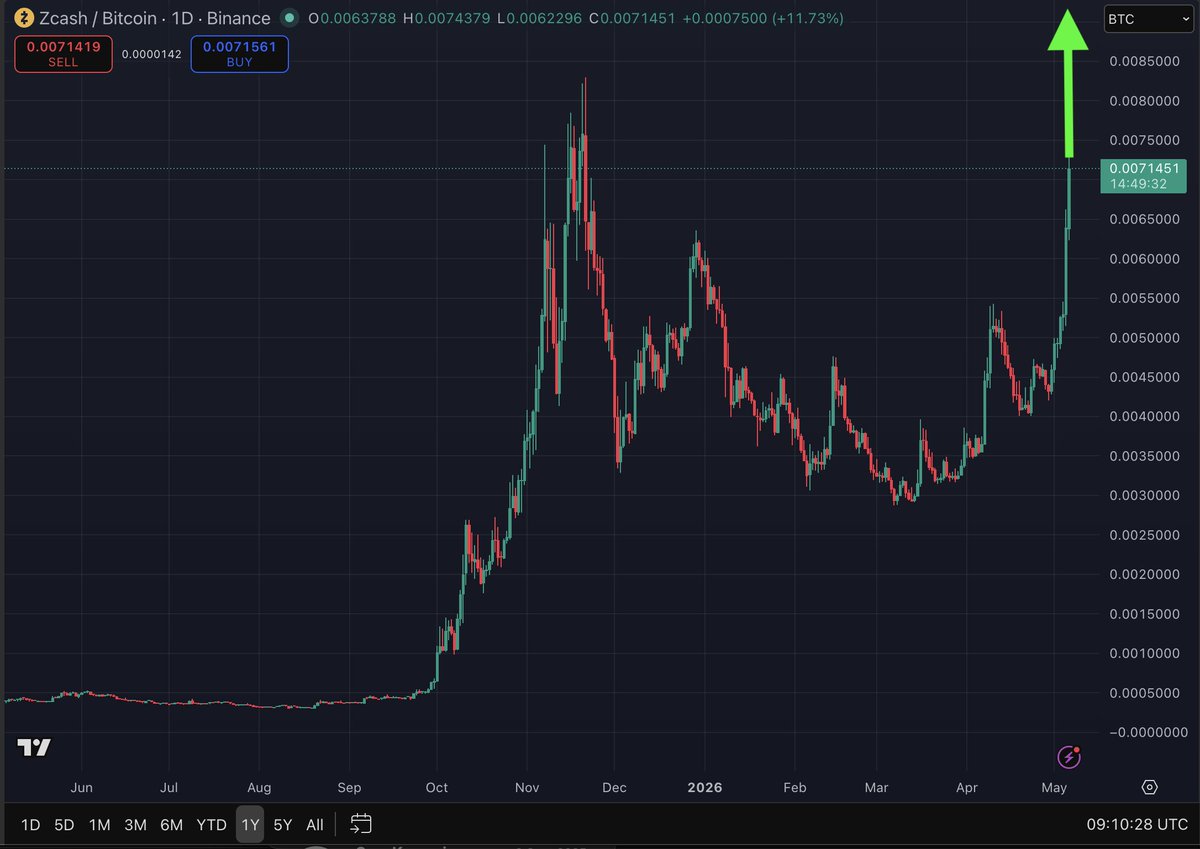
The security patch arrived as the ZEC price traded near its strongest levels in months. Zcash has gained more than 150% since April 1, while its market value has moved close to $10 billion. At one point, ZEC rose above $600 before trading near $567 at the time of reporting.
Despite its March drop, Zcash later regained market attention as buyers returned and new privacy-coin narratives supported demand. ZEC had fallen below its 50 SMA after a resistance rejection, yet the broader long-term case remained tied to adoption, privacy demand, and institutional interest.
Analysts pointed to Robinhood’s spot ZEC listing, growing discussion around a possible Grayscale Zcash Trust conversion into a spot ETF, and renewed demand for privacy-focused assets. Futures activity also increased, with ZEC-linked liquidations topping $60 million over 24 hours.
Multicoin Capital has become part of the market debate after co-founder Tushar Jain confirmed that the fund has built a large ZEC position since February. Jain said demand for private, censorship-resistant assets is growing, and he described ZEC as the clearest public-market expression of that thesis.
BitMEX founder Arthur Hayes added more attention after saying ZEC could target 10% of the Bitcoin price. Based on Bitcoin’s recent level, that would place ZEC near $8,193. The call implies a rise of more than 1,300% from around $571, though Hayes did not provide a timeline.
Analysts also noted that Zcash may benefit from its optional privacy model at a time when some privacy coins face exchange pressure. Monero’s delistings in parts of Europe under MiCA-related compliance rules have strengthened that comparison. Zcash remains available on major venues while offering shielded transaction tools.




