






Bitcoin’s market behavior shifted meaningfully in the second half of 2025, according to on-chain data shared by CryptoQuant.
The report shows Bitcoin entering a weak-to-neutral consolidation phase following a broader decline, while systemic stress across the market remained limited. Price action stayed muted, but the underlying structure changed in ways that reduced downside pressure without triggering renewed risk-taking.
One of the most important developments highlighted in the report is Bitcoin’s sharp structural decoupling from the S&P 500 during H2 2025. This shift was not temporary. Instead, it reflected deeper changes in how capital flows through the crypto market. Spot Bitcoin ETFs altered demand dynamics, moving activity away from short-term, equity-style risk-on trading toward allocation-driven flows that operate independently from stock market momentum.
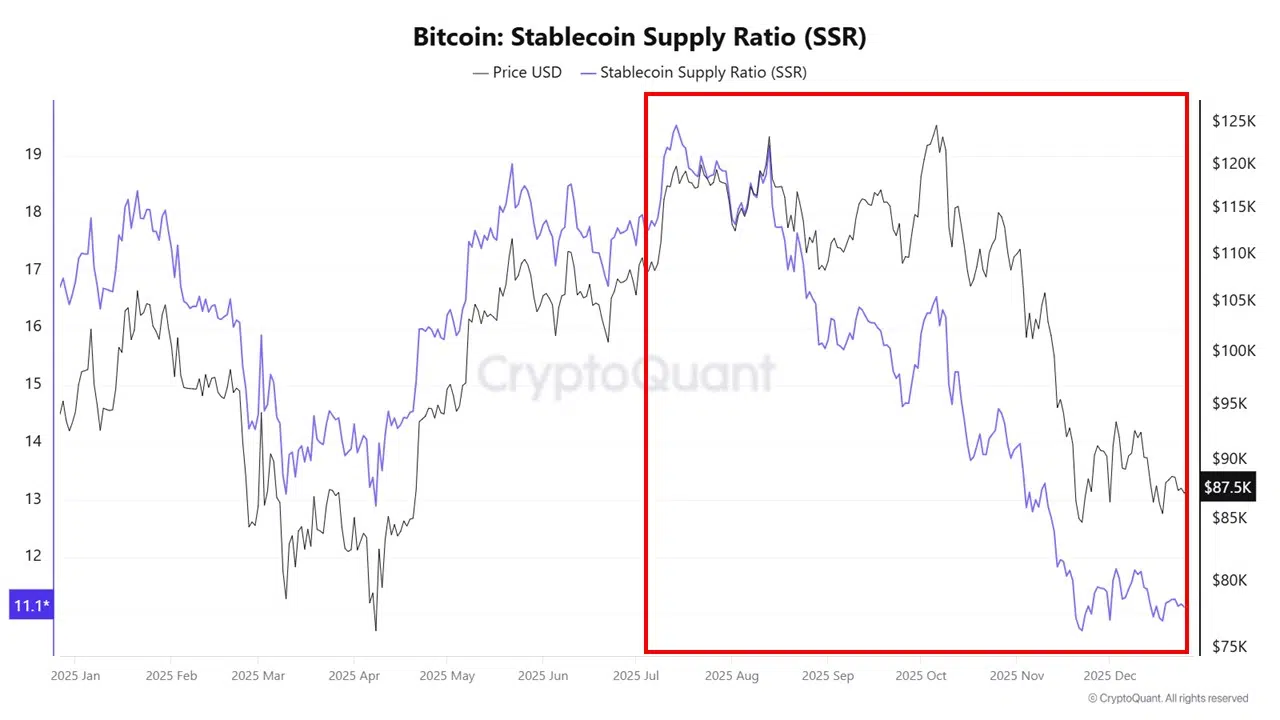
Leverage dynamics also changed. Derivatives markets increasingly relied on stablecoin-based margin, while BTC-margined high leverage declined. This transition reduced liquidation cascades and limited the transmission of equity volatility into Bitcoin. At the same time, macro liquidity rotated toward commodities and precious metals, leaving Bitcoin relatively sidelined and less reactive to equity-driven sentiment.
The report further notes a change in market participants. Short-term trend-following traders, those most likely to trade Bitcoin as an equity proxy, continued to exit. The remaining holder base became dominated by long-term holders and ETF-related custody, reinforcing more stable supply behavior. As a result, price discovery turned increasingly internal, with Bitcoin responding more to holding behavior and supply constraints than to external macro signals.
This structural shift is supported by the Stablecoin Supply Ratio (SSR). Despite weak price performance, SSR declined throughout the period, signaling rising stablecoin purchasing power. Capital remained within the crypto system rather than exiting into equities. The base scenario outlined in the report points to continued consolidation driven by muted demand rather than forced selling, with invalidation dependent on renewed leverage buildup or broad stablecoin deployment.
The conclusion is clear: Bitcoin’s decoupling was structural. The mechanisms that once tightly linked it to equity markets were largely removed, reshaping how price responds during periods of macro uncertainty.



