




- More than $660 million in crypto liquidations followed Bitcoin’s break below key support.
- Falling exchange balances and steady long-term holder activity show that the available BTC supply is shrinking, easing potential sell pressure.
Bitcoin dropped below $77,000 on Monday as rising oil prices, geopolitical tensions and higher Treasury yields piled pressure crypto and other risk assets. The move pushed BTC to its lowest level since May 1, while liquidation data showed a sharp reset across leveraged long positions.
The decline followed a fresh warning from U.S. President Donald Trump against Iran, adding pressure on global markets. Oil prices climbed as traders reacted to renewed uncertainty around the Middle East and the Strait of Hormuz. At the same time, higher bond yields reduced demand for speculative assets, including Bitcoin.
BTC dropped to around $76,700 during early trading, extending losses from last week’s rejection near $82,000. The broader crypto market also weakened, with Ethereum trading near $2,122 and XRP around $1.39. The total crypto market capitalization fell about 1.45% to $2.56 trillion.
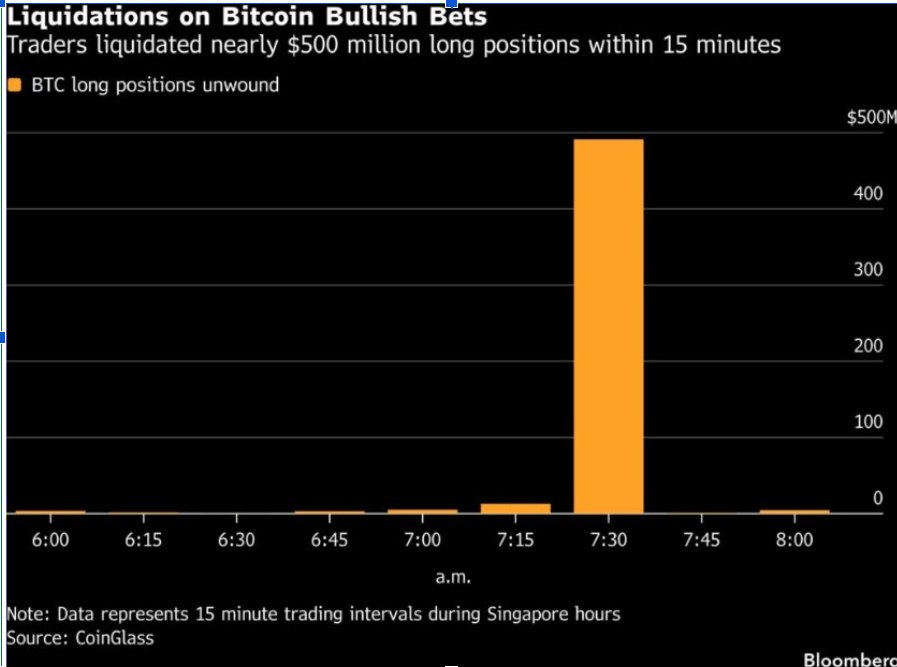
Liquidation data showed that the sell-off forced a fast unwind of bullish positions. More than $500 million in long positions were liquidated within a short window, while total crypto liquidations crossed $660 million over 24 hours. Bitcoin’s break below the $77,800 support zone triggered several stop orders and added to the downward move.
The pressure also came as traders reduced expectations for near-term Federal Reserve rate cuts. Prediction market data showed strong odds that the Fed will keep rates unchanged in June and July. Higher yields make non-yielding assets such as Bitcoin less attractive during periods of macro stress.
Recent news shows BTC ETF outflows are also contributing to the latest Bitcoin price weakness, as spot funds lost over $1 billion after six straight weeks of inflows.
Binance Data Points to Weaker Bitcoin Sell Pressure
While Bitcoin price action remains weak, Binance Research data shows that the current sell-off may be losing strength. Several on-chain indicators suggest that the investors most likely to sell have already reduced exposure, while long-term holders continue to keep their coins inactive.
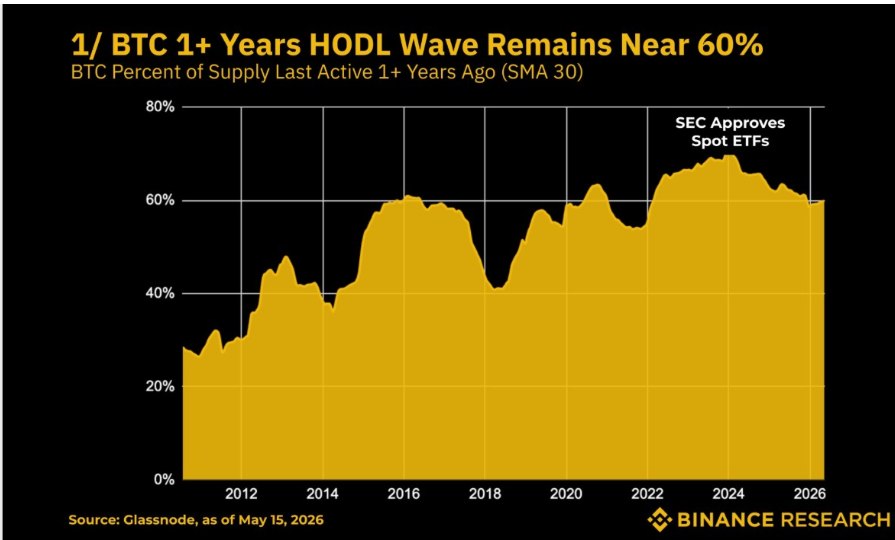
Nearly 60% of Bitcoin’s total supply has not moved in more than one year. That figure remains close to historical highs, even after the spot Bitcoin ETF approval cycle and the recent market correction. Long-term holders usually move coins during stronger profit-taking phases, but current data shows limited selling from that group.
Exchange balances also continue to fall. Binance Research noted that Bitcoin held on exchanges has dropped to about 15% of total supply, the lowest level in nearly six years. Exchange balances peaked near 17.6% during the COVID-era market period. Since then, roughly 500,000 BTC has moved away from trading platforms into cold storage or self-custody.
Lower exchange supply does not stop volatility, especially during macro shocks. However, it reduces the amount of Bitcoin readily available for immediate spot selling. That matters during sharp downturns, as thin exchange supply can limit follow-through selling once leveraged positions clear.
Short-term holder data also shows a market reset. Binance Research said the Short-to-Long-Term Realized Value indicator remains in a historical bottom zone. In past cycles, similar readings appeared when speculative traders had already left the market and selling pressure began to fade.
The Short-Term Holder MVRV indicator has also returned toward the 1.0 level after staying below it for months. A reading below 1.0 indicates that recent buyers are holding unrealized losses. A move back above that level suggests newer holders are returning to slight unrealized profits, which can reduce panic selling during rebounds.



