
- Cardano community approved $71M treasury spend (74% voted yes) for scalability/interoperability upgrades, advancing decentralization goals.
- Network upgrades focus on Leios scalability, Bitcoin DeFi integration, and partnerchain support for enterprise efficiency improvements.
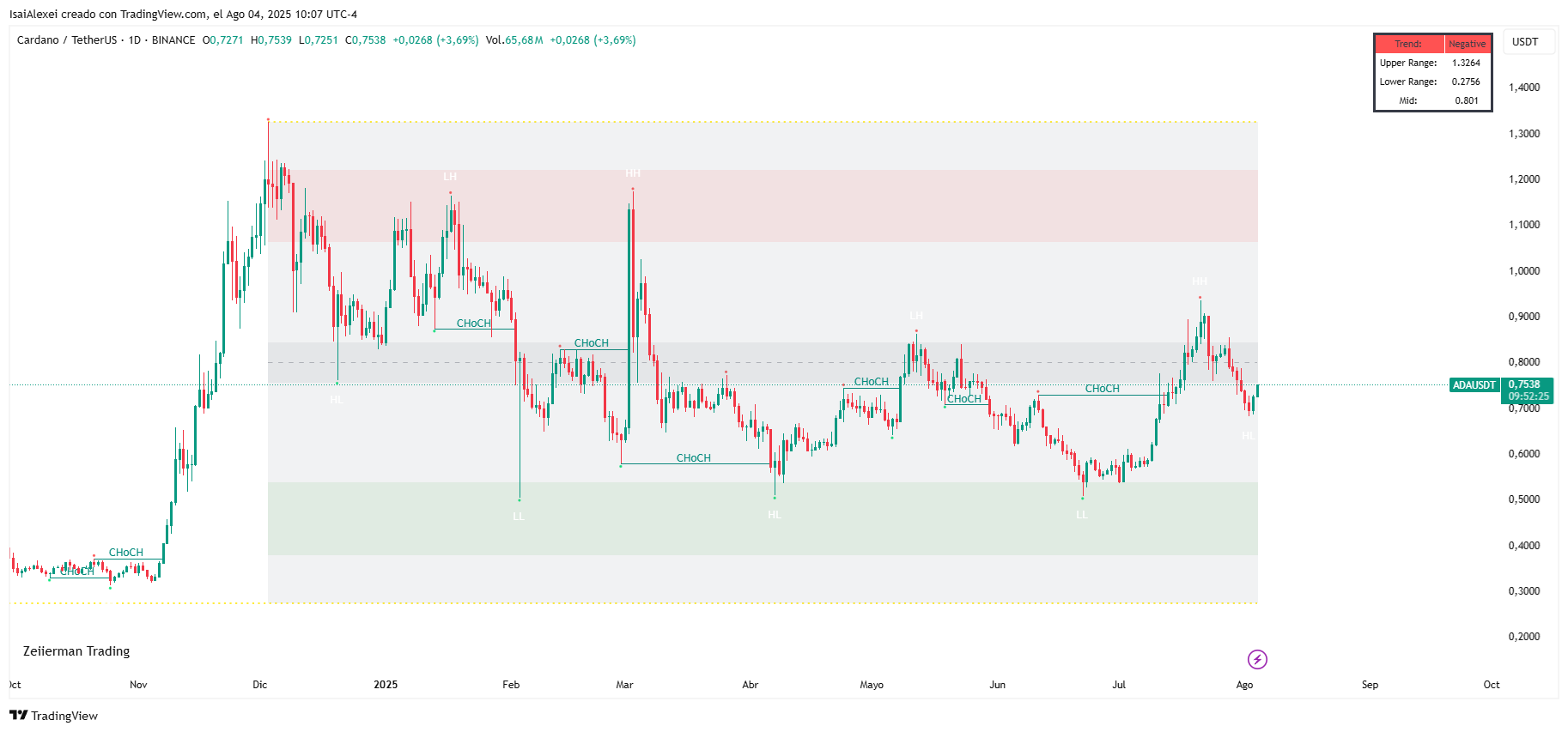
Cardano (ADA) trades around $0.740, up ~1.8% on the day, but still down ~11% over the past week after a failed breakout attempt.
Ecosystem & News Updates:
- Governance Milestone: The Cardano community approved a 96 million ADA ($71M) treasury spend for major network upgrades, with 74% voting in favor. These upgrades focus on scalability and interoperability, reinforcing Cardano’s push toward a fully decentralized, self-sustaining ecosystem.
- Governance Decentralization: This funding decision marks a historic moment in decentralized governance for Cardano, aligning with its roadmap to give the community greater control over network direction.
- Technical Development: Key development work continues on Leios scalability improvements, BTC DeFi integration, and partnerchain support, setting the foundation for higher network efficiency and enterprise integration.
Leios Consensus Explained: Pipelined Rounds for High-Throughput Blockchain Confirmation
Leios runs multiple overlapping instances of its protocol, much like a choir singing rounds. Each instance, or “pipeline,” moves through four stages in sequence, but pipelines start their first stage at staggered intervals to maximize throughput.
In the first stage, nodes generate “Input Blocks” at a rate of one to five per second. Each block carries user transactions, typically between 100 and 300 kilobytes in size. Nodes broadcast these blocks network-wide, ensuring every participant sees the same pending transactions.
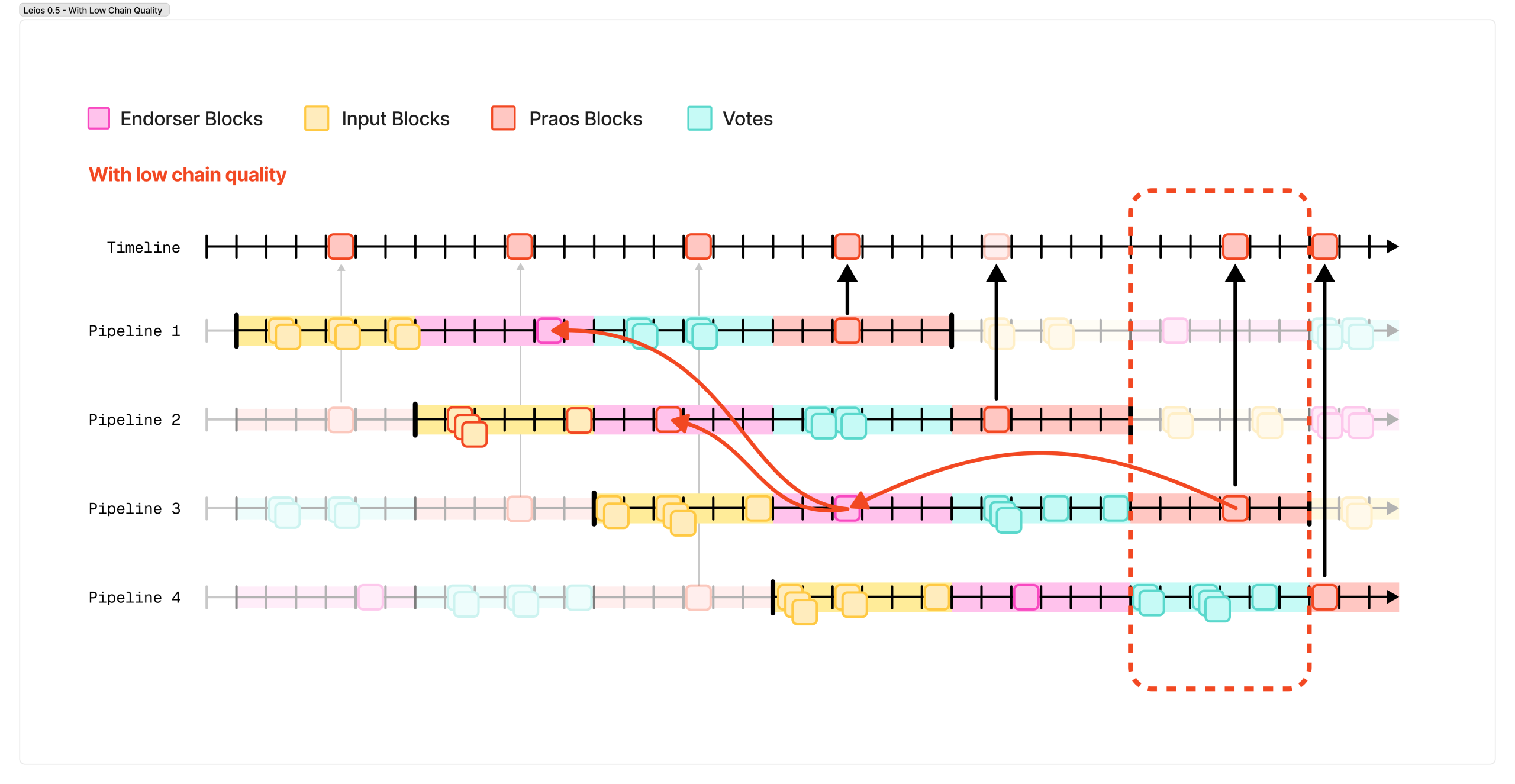
Next, in the second stage, nodes assemble “Endorsement Blocks.” Each of these references a set of recent Input Blocks that align with the current ledger state. Additionally, the new Endorsement Block cites previous endorsement outputs from earlier pipelines. Nodes then share these blocks with their peers.
During the third stage, nodes validate each Endorsement Block they receive. After local checks, they create and broadcast a signed “vote” for that block. These votes accumulate as proof of network agreement.
Finally, in the fourth stage, selected validators produce a “Ranking Block” under the Praos scheme. They choose the Endorsement Block that has secured votes from at least 70 percent of active stake. The validator bundles a compact certificate of that consensus into the Ranking Block, finalizing the transactions.
By overlapping pipelines, Leios maintains continuous activity: while one pipeline reaches its third phase, another moves through its second, and yet another begins its first. This design drives high throughput and fast confirmation without waiting for each stage to finish before starting the next.
Technical Price Analysis
ADA is consolidating after the failed breakout at $0.8955, with current resistance at $0.78–$0.81. Immediate support sits at $0.70–$0.67; a breakdown could test $0.65, as forecasted by analysts.
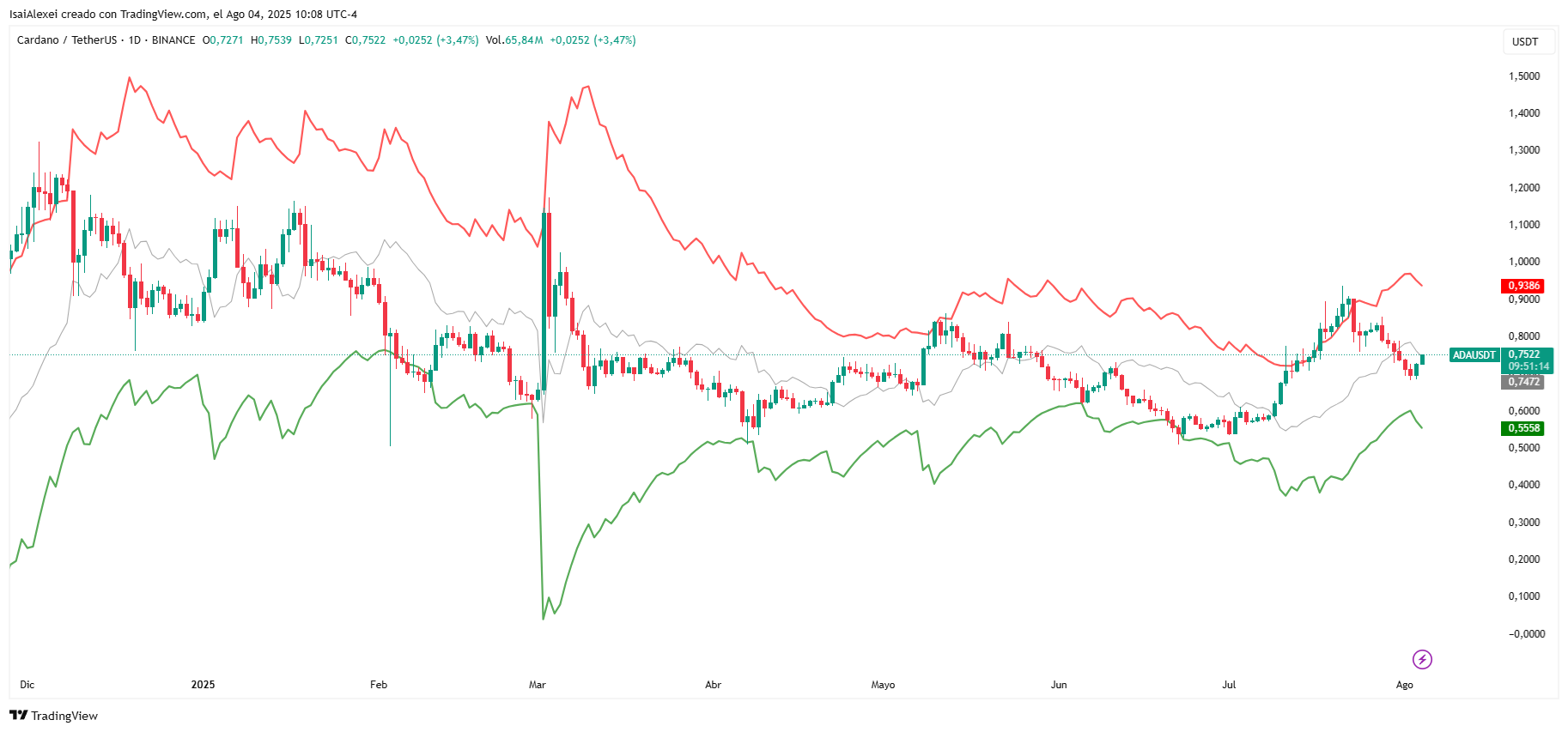
RSI is neutral, suggesting a balanced momentum phase. A confirmed breakout above $0.81 could target $0.90–$0.97, while losing $0.67 risks further downside.
Overall, Cardano’s ecosystem upgrades and governance progress provide long-term bullish fundamentals, but price action remains in a consolidation phase with caution warranted around key support levels.