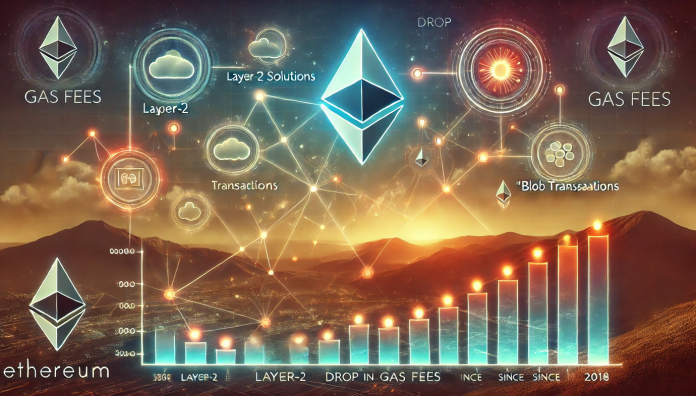

- Ethereum gas fees have dropped to the lowest levels since 2016.
- This decrease in fees impacts network security, user adoption, and market dynamics.
Ethereum Gas Fees Hit Record Lows: What It Means for the Network’s Future
On June 30, 2024, Ethereum reached a significant milestone: gas fees fell to their lowest levels since 2016. This development sent ripples through the cryptocurrency ecosystem, altering the economic dynamics of the world’s second-largest blockchain. Why has there been such a dramatic drop in gas fees, and what does this mean for the future of Ethereum and the broader crypto industry?
Historic Decline in Gas Fees
According to Dune Analytics, Ethereum’s gas fees averaged 3 Gwei, or about $0.14, on June 30, 2024. This sharp decline contrasts starkly with the sky-high fees during the NFT boom in 2021, when the demand in the NFT sector drove transaction costs to exorbitant levels. At that time, many questioned Ethereum‘s viability and explored cheaper alternatives like Solana.
Today, despite robust transaction activity, gas fees remain surprisingly low. This reduction results from several technological advancements, including enhanced Layer-1 efficiency and the integration of Layer-2 solutions. The introduction of “blob transactions” with EIP-4844 has significantly improved network scalability. These innovations have streamlined transactions while minimizing costs, redefining Ethereum’s capabilities.
Impacts on the Ethereum Ecosystem
Firstly, this reduction in transaction costs could rejuvenate Ethereum’s appeal to crypto developers and users, particularly those who had migrated to more cost-effective alternatives. By making transactions more affordable, Ethereum repositions itself as the go-to platform for decentralized applications (dApps) and everyday transactions, potentially boosting adoption and innovation within the network.
This development also carries significant implications for network security. Historically, high gas fees acted as a deterrent against Denial-of-Service (DDoS) attacks, making such attacks prohibitively expensive. With lower fees, the scalability and efficiency improvements from recent updates are expected to maintain network security even in the face of potential increases in attacks.
Economically, the fee reduction implies that Ethereum, the second-largest cryptocurrency by market capitalization, is now less deflationary. The decrease in burned fees means the total supply of Ethereum increases, altering market supply and demand dynamics. This shift could influence investor perception and the long-term strategies of network participants.
While lower gas fees are a boon for users in terms of cost and accessibility, concerns about security and economic sustainability remain. Ethereum‘s next steps involve balancing these aspects while continuing to innovate in an increasingly competitive and demanding blockchain environment.