
- IOTA targets the $2.5 trillion trade finance gap by digitizing documents, identities, and payments across global supply chains.
- Salus uses TWIN for verifiable identities and tokenized receipts, enabling shared records, faster settlement, and lower working-capital costs.
IOTA sets out a clear goal: digitize trade finance and reduce a funding shortfall measured in trillions. The project builds open public rails for data and payments so exporters, funders, and logistics firms can exchange verified information without paper or manual reconciliations.
At the center, Salus applies IOTA’s TWIN stack to the critical-minerals trade. The platform issues verifiable identities for suppliers, warehouses, carriers, and even containers. It then registers credentials on IOTA’s ledger so participants can check counterparties and meet KYC/AML requirements.
Key trade documents—such as warehouse receipts and bills of lading—are converted into on-chain tokens that represent ownership and provenance. Because those records move across TWIN nodes, customs, insurers, and lenders can view the same source of truth.
Moreover, Salus links real-world events to finance. When an inspection clears or a shipment reaches a certified site, a smart contract can transfer title or release partial payment. This reduces settlement frictions and shortens working-capital cycles. Additionally, an integrated “gas station” lets Salus sponsor network fees for users, which lowers onboarding hurdles for smaller firms.
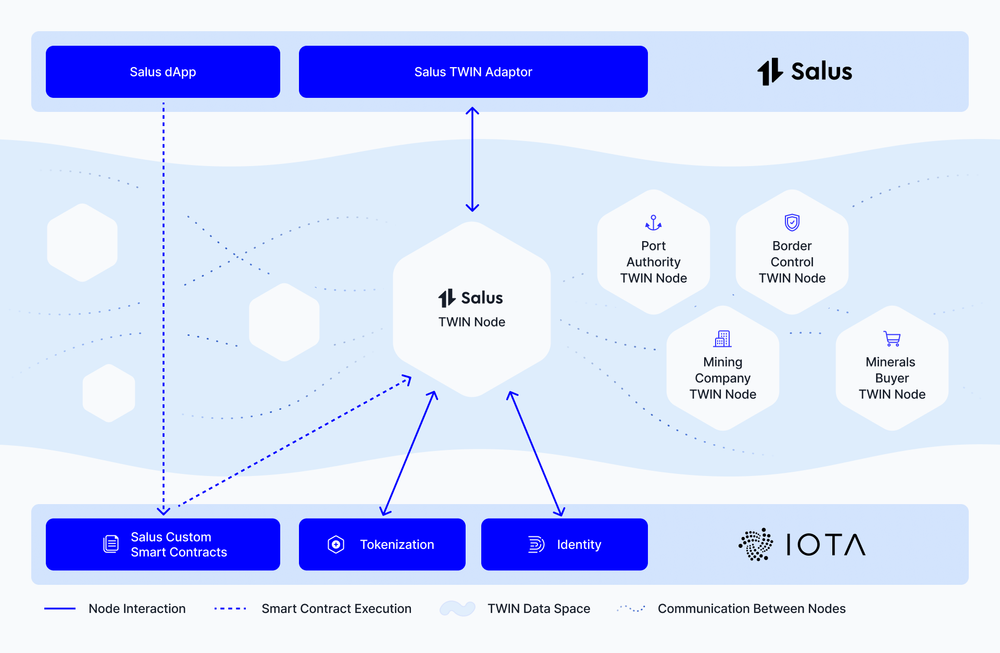
The approach aligns with emerging digital-trade norms like MLETR. It also widens the pool of potential liquidity. Stablecoin treasuries, DeFi funds, and traditional lenders can fund against tracked collateral rather than static paperwork. In a market where trust is scarce, transparent audit trails act like daylight.
IOTA’s trade agenda is broader than minerals. In East Africa, TLIP replaces PDF workflows with real-time data exchange for cross-border shipments. Realize brings fund shares—such as U.S. Treasury exposure—on-chain, expanding collateral options that can settle quickly.
Taken together, these pieces illustrate a practical model: verified identity, tokenized documents, event-driven settlement, and fee abstraction. Therefore, the program does not promise magic; it offers infrastructure that reflects how trade actually works. If adoption scales, the result could be lower costs, faster cash conversion, and a narrower global trade finance gap.
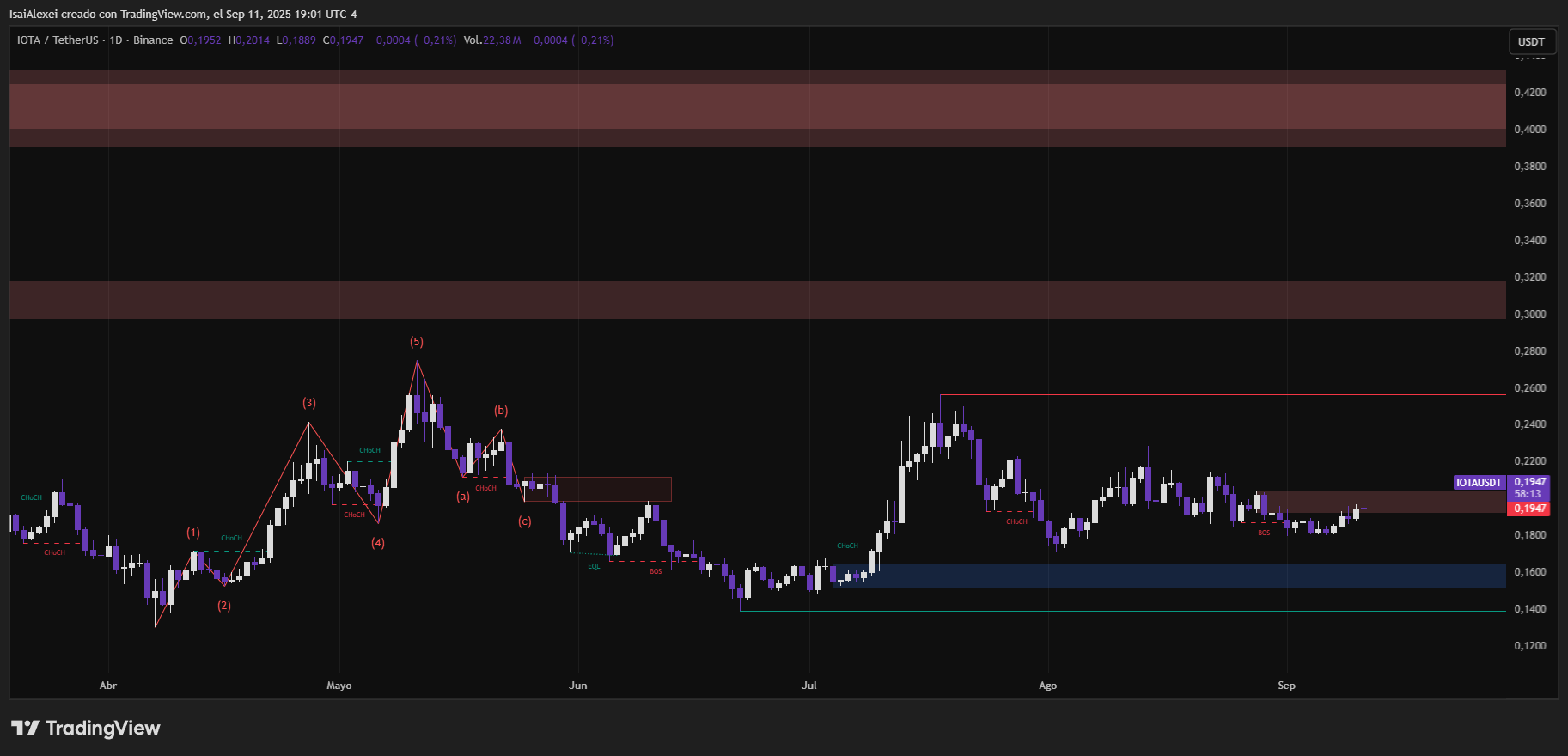
IOTA (IOTA) is trading at $0.1949, registering a 0.25% gain in the last 24 hours and 6.81% growth over the past 7 days. The current market capitalization is around $783.6 million, with a circulating supply of over 4 billion tokens.
Trading volume reached $21.36 million, marking a 44% increase from the previous day and indicating renewed short-term interest in the asset. The token’s 24-hour price range fluctuated between $0.193 and $0.2003, signaling low volatility within a consolidating range.
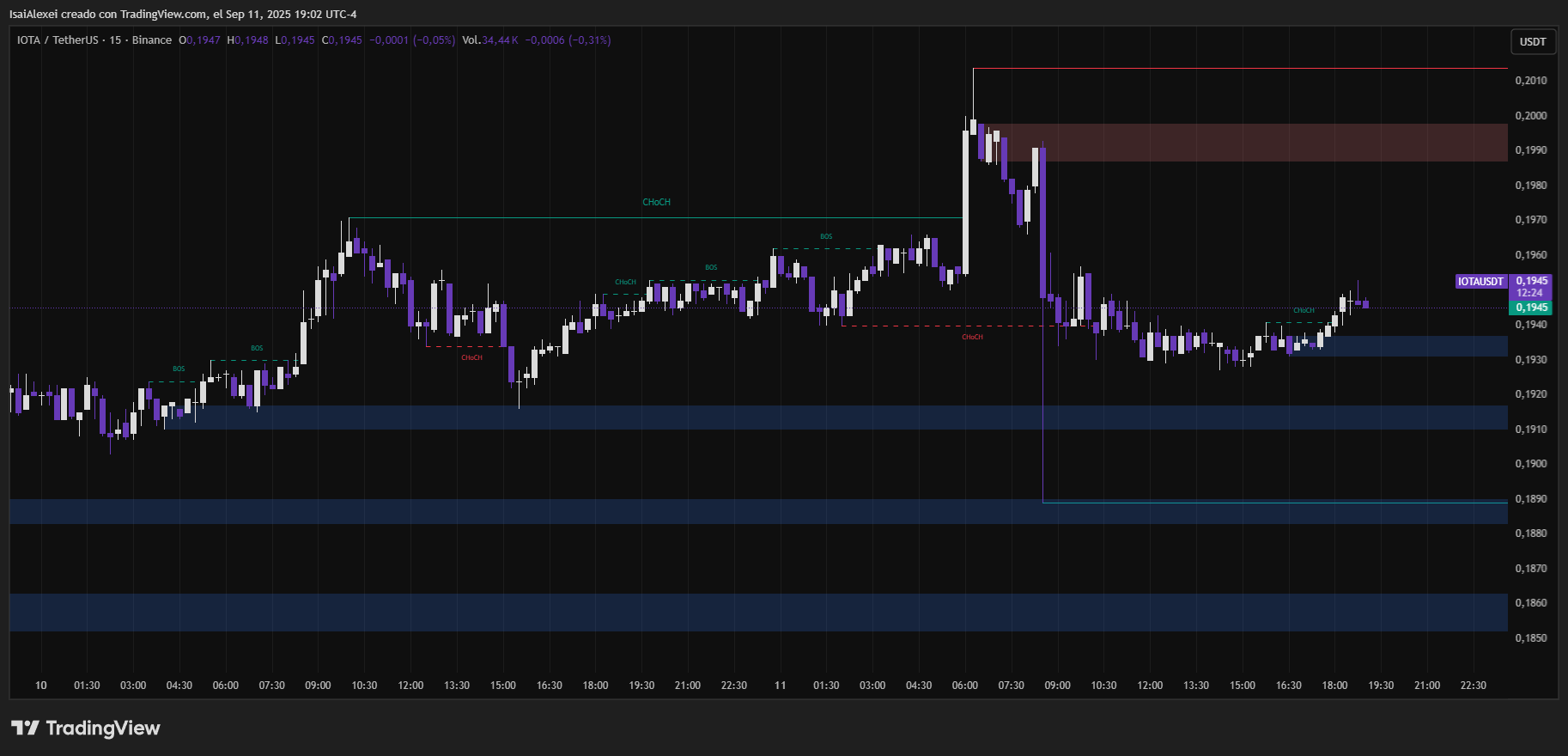
Technically, IOTA is currently holding support just under the $0.20 level, a psychological resistance-turned-ceiling that it has attempted to reclaim multiple times in the past month. The weekly performance aligns with the broader altcoin recovery, though IOTA remains more than 96% below its all-time high of $5.25, and 138% above its historic low, placing it in a mid-cycle recovery trend.
In terms of network and commercial developments, IOTA recently recorded an important step in adoption. The DeFi platform Salus has launched on the network and is set to tokenize mineral exports from Rwanda to the United States, targeting critical supply chains.
Additionally, IOTA completed the Stardust upgrade, which included a shift in token denomination—from MIOTA to IOTA—and introduced support for new features on its EVM-compatible chain. Liquidity across major exchanges like Binance, OKX, MEXC, and Upbit remains steady, indicating active interest from regional and global participants.