

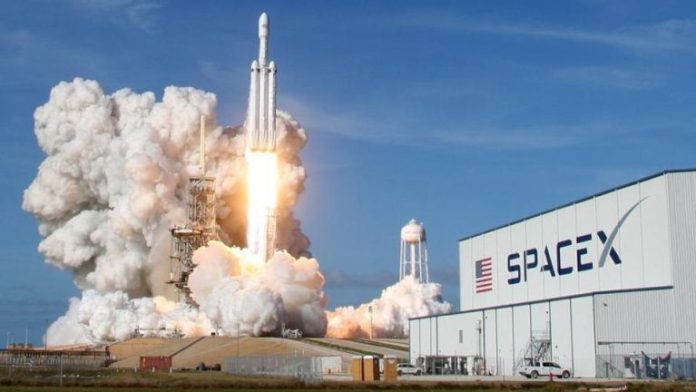

Reports indicate that SpaceX is actively preparing for an initial public offering targeted for mid-to-late 2026, a timeline that Elon Musk has reportedly confirmed as “accurate.” The potential listing has intensified market speculation around what could become the most consequential IPO of the decade.
Record-Breaking Financial Targets
SpaceX is said to be aiming for a valuation of $1.5 trillion, which, if realized, would eclipse the scale of Saudi Aramco’s landmark 2019 debut and set a new benchmark for public listings. The company is also reported to be seeking to raise well over $30 billion in fresh capital.
The ambition builds on momentum from a late-2025 secondary share sale that firmed up an internal valuation near $800 billion, with shares priced around $420. That transaction strengthened confidence in SpaceX’s growth trajectory and provided a reference point for public-market expectations.
Strategic Drivers Behind the 2026 Listing
A significant portion of IPO proceeds is expected to fund orbital data center initiatives—space-based infrastructure powered by solar energy to support high-intensity AI workloads, including potential demand from xAI. This vision positions SpaceX at the intersection of space, energy, and AI.
On the revenue front, SpaceX is projected to generate $22–$24 billion in 2026, largely driven by the rapid expansion of Starlink, which continues to scale globally across consumer, enterprise, and government markets.
Technological progress in the Starship program remains a central catalyst. Continued milestones are cited as key justification for the company’s trillion-dollar valuation thesis, underpinning long-term launch economics and deep-space ambitions.
Market Impact and Sector Spillovers
The prospect of a SpaceX IPO has already rippled across the aerospace and satellite ecosystem. Publicly traded peers such as Rocket Lab and EchoStar reportedly saw share gains ranging from 4% to 12% following recent reports.
Analysts describe a SpaceX listing as “seismic,” arguing it could reframe capital markets by placing the space economy at the center of global finance. If SpaceX reaches public markets on its stated terms, the debut may redefine how investors value frontier technologies, and who leads the next era of economic power.