




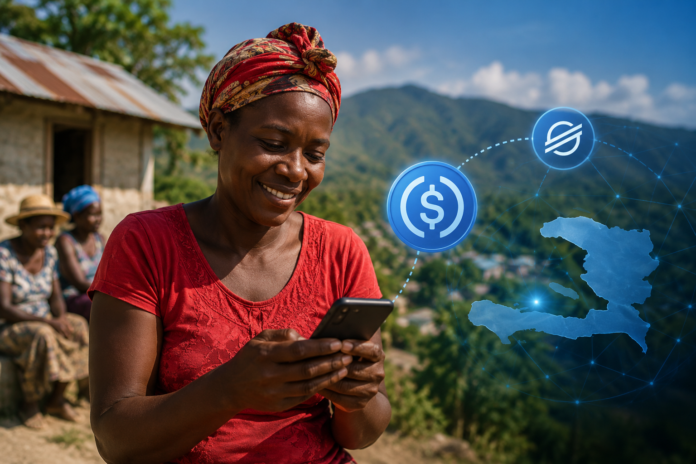

- Mercy Corps Ventures launches Stellar-powered blockchain aid pilot for vulnerable women in Haiti.
- The model could be adopted by other humanitarian organizations giving over $56 million a year in Haiti.
Mercy Corps Ventures is partnering with Fonkoze Foundation and Paon Bleu to launch a blockchain-based aid pilot in Haiti, powered by Stellar. It intends to distribute over $80,000 in the USDC stablecoin to vulnerable Haitian women, all done on-chain.
Haiti faces one of the world’s worst humanitarian crises in recent years. Vulnerable groups, especially women and children, are at great risk. The traditional financial systems, already fragile before this crisis, have now been destroyed. This means that organizations are unable to deliver aid in the form of cash to the needy.
.@mercycorps Ventures is launching a blockchain-based digital cash pilot in Northwest Haiti to 200 of Haiti's most vulnerable rural women.
Read more about how they're using @Bousolapp, built on Stellar, to do it ⬇️https://t.co/esuF0ItKnz
— Stellar (@StellarOrg) May 22, 2026
Handling cash is both risky for the beneficiary and the benefactor due to insecurity. It is also impractical, cumbersome, and time-consuming in situations that require swift action. Additionally, records are difficult to audit, making them ripe for fraud.
Stellar Solves Humanitarian Aid Disbursement
Mercy Corps Ventures is piloting a program that could help overcome all these challenges. Bousol, a digital wallet built on the Stellar network, will enable women to receive, store, and spend USDC, or convert it to cash through local microfinance Sèvis Finansye Fonkoze (SFF) branches and participating local vendors.
The digital wallet will offer fast, low-cost transactions with full traceability. The organization notes that it chose to issue a USD-backed stablecoin to provide currency stability in a highly volatile region.
The pilot is also supporting local vendors to open SFF accounts and connect them to their Bousol wallets. With the initiative, the vendors can access USDC to transact and save. By building a savings history, the vendors can eventually get credit to help them grow their businesses.
The organization noted in a post:
“This pilot brings together two proven systems: a trusted social protection program and a blockchain-based payment platform, to test whether digital cash can work for the people who need it most, in the place where the barriers are highest.”
It further revealed that the success of this pilot could lead to greater adoption of the model in the country. Haiti’s Cash Working Group, which is made up of 52 humanitarian organizations that disburses over $56 million annually, could adopt the model to modernize its operations.
The Stellar network has been keen on humanitarian work and has built Stellar Aid Assist, which assists organizations in putting cash in people’s hands quickly and at a low cost. The program leverages the Stellar blockchain and the wider Stellar ecosystem to ensure both onramp and offramp solutions. It already has a track record, having worked with the UNHCR and the International Rescue Committee.
As ETHNews reported, Stellar is also working with the government of Bermuda to power key payment and financial services as it works toward a fully on-chain national economy.



