


Bitcoin derivatives markets are showing a clear short-term structural shift, according to a recent analysis by Amr Taha, shared via CryptoQuant.
The latest data highlights aggressive short liquidations on Binance Futures, alongside a sharp slowdown in stablecoin transfer activity across major networks. Together, these signals suggest a market that has flushed late bearish positioning but may now be facing liquidity constraints.
Dual Short Liquidation Events Reshape BTC Derivatives Positioning
The Binance liquidation delta chart shows two consecutive short liquidation events occurring as Bitcoin traded above the $87,700 level. Each wave exceeded $300 million in forced liquidations, pushing total short liquidations beyond $600 million within a short time window.
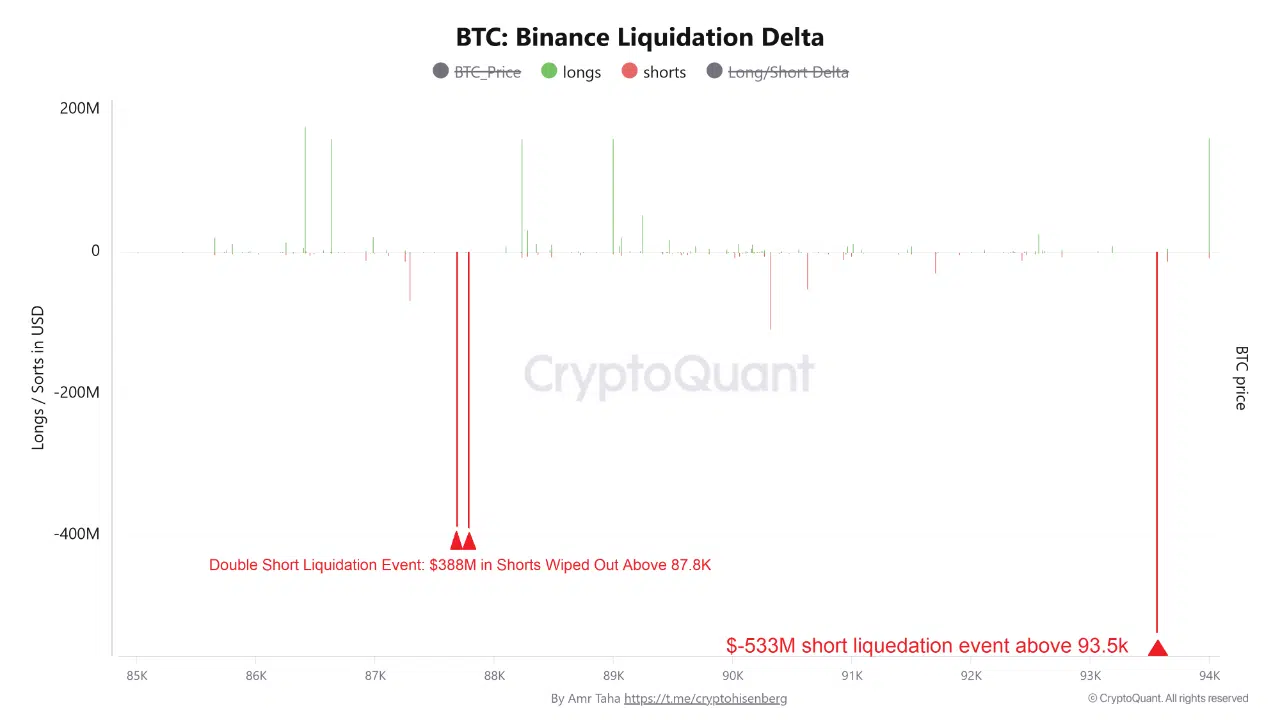
The most significant event took place above approximately $93,500, where around $533 million in short positions were wiped out. These liquidations occurred as price moved higher against over-leveraged bearish traders, forcing positions to be closed by the exchange through market buy orders. As a result, liquidation-driven buying pressure amplified the upside move, accelerating price action into key resistance zones.
Why Short Liquidations Matter for Price Action
Short liquidations typically occur when a large concentration of traders is positioned for downside while price moves higher. As margin requirements are breached, exchanges forcibly close these positions by executing market buys. This mechanism often creates sharp upward spikes and can temporarily push price beyond technically significant levels.
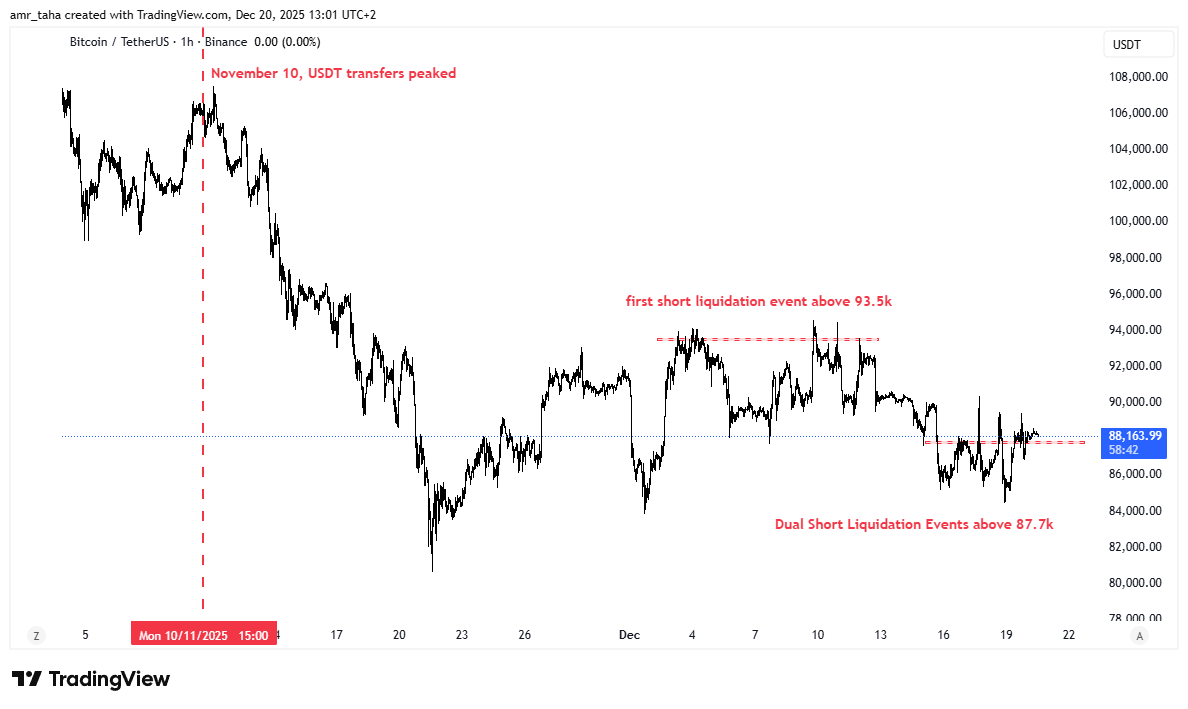
However, Amr Taha notes that areas where heavy liquidations occur often evolve into short-term resistance zones. Once forced buying is exhausted, follow-through depends on whether fresh spot or derivatives demand enters the market.
USDT Transfer Volumes Signal Cooling Liquidity Momentum
The second chart compares daily USDT transfer volumes on TRON (TRC20) and Ethereum (ERC20), revealing a notable decline in stablecoin activity following a major peak earlier in the cycle.
On November 10, USDT transfers reached cycle highs, with approximately $13 billion moving on TRON and nearly $35 billion on Ethereum. Since that point, volumes have steadily contracted. By December 15, TRON-based transfers had fallen to around $1.7 billion, while Ethereum volumes dropped to roughly $3.7 billion.
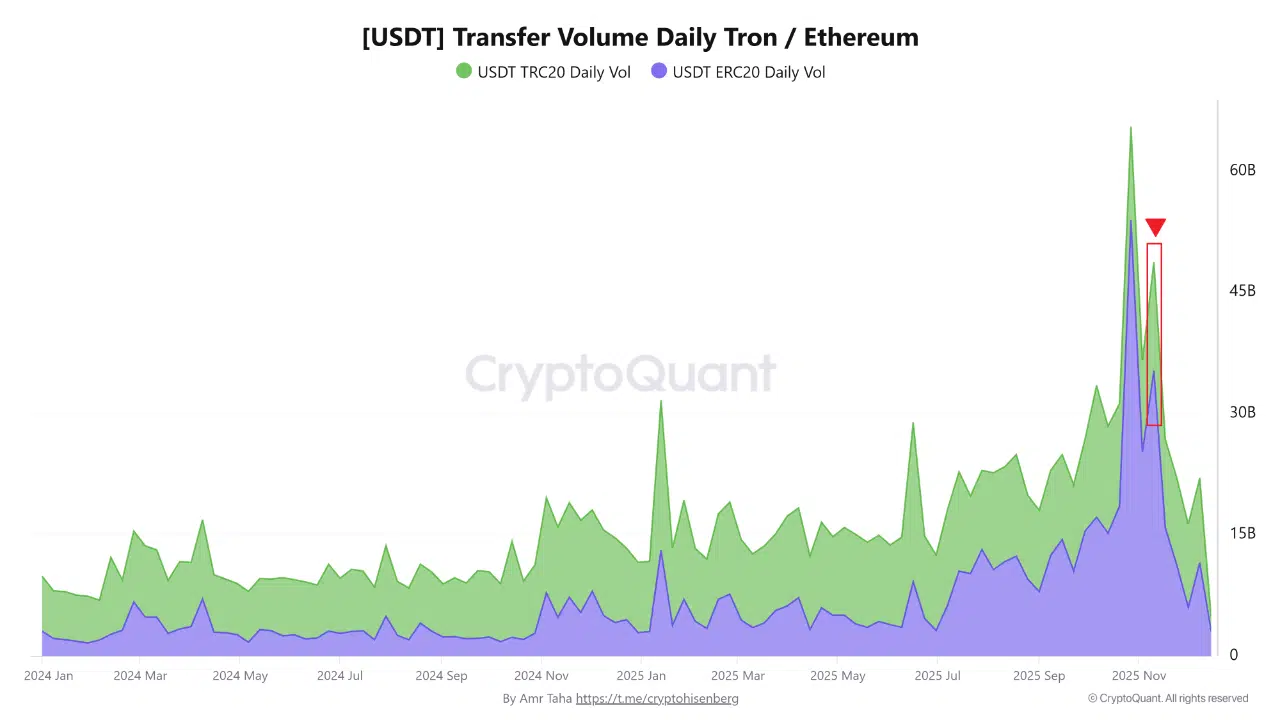
This sustained decline suggests reduced capital rotation and weaker liquidity inflows, conditions that can limit upside continuation even after aggressive liquidation-driven rallies.
Market Implications: Momentum vs. Liquidity
According to the CryptoQuant analysis, the combination of large short liquidations and declining stablecoin transfer activity creates a mixed short-term outlook. While forced liquidations have removed bearish pressure from the derivatives market, the absence of strong stablecoin inflows points to fading liquidity momentum.
As a result, liquidation clusters may act as resistance rather than launch points for sustained breakouts. Monitoring both derivatives positioning and stablecoin flow trends remains critical for anticipating near-term market reactions and shifts in trader sentiment.