



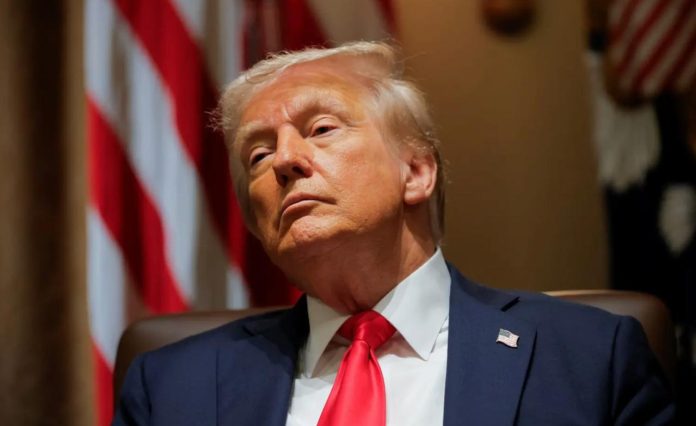

Following a large-scale U.S. military operation that led to the capture of Nicolás Maduro, President Donald Trumpannounced that the United States will assume temporary control over Venezuela.
Speaking during a press conference at Mar-a-Lago, Trump said the move is intended to stabilize the country and oversee a transition away from the current regime.
U.S. to Oversee Interim Governance
Trump stated that the United States will remain in charge “until such time as we can do a safe, proper and judicious transition.” He emphasized that Washington will not allow remnants of the Maduro regime to retain power, arguing that replacing one figure with another from the same system would only recreate years of instability.
No specific timeline was provided for the U.S. presence. Instead, Trump said the transition back to Venezuelan control will occur when American officials determine the conditions are secure and sustainable.
Oil, Infrastructure, and Economic Reset
As part of the interim plan, Trump announced that major U.S. oil companies will enter Venezuela to repair what he described as “badly broken infrastructure.” The goal, according to Trump, is to restore production capacity and generate revenue to support the country’s recovery.
On political leadership, Trump said the administration is still weighing its options. He did not immediately endorse opposition leader María Corina Machado or 2024 presidential candidate Edmundo González, signaling that decisions on Venezuela’s future leadership structure are still under discussion.
Warning of Further Military Action
Trump confirmed that U.S. forces remain on high alert and said a “second and much larger attack” is prepared if needed. He framed this as a deterrent against internal resistance or external interference that could threaten the transition process.
Maduro Transported to Face Charges
According to U.S. officials, Maduro and his wife, Cilia Flores, were flown out of Venezuela following the operation. They are reportedly aboard the USS Iwo Jima, en route to New York.
Both are expected to face narco-terrorism and weapons-related charges, with a court appearance in Manhattan anticipated as early as Monday, January 5.
International Response Splits Sharply
The operation has drawn strong international reactions. The United Nations, along with Russia and China, condemned the action as an unacceptable violation of national sovereignty.
By contrast, some regional leaders expressed support. Argentina’s president, Javier Milei, publicly praised the move, framing it as a decisive step against authoritarian rule in the region.
Trump’s announcement marks a dramatic escalation in U.S. involvement in Venezuela and signals that Washington is prepared to take an active, open-ended role in reshaping the country’s political and economic future.



