




- CryptoQuant data show exchange balances falling as daily ETH inflows approach $900 million, nearing recent Bitcoin flow levels.
- BitMine began accumulating ether July 8, reaching 1.7 million ETH treasury, further tightening tradable float and institutional availability.
Binance recorded one of its largest ether withdrawals of the past year: 208,000 ETH left the exchange across two sessions. On August 24, wallets removed 90,000 ETH. The next day, outflows rose to 118,000 ETH.
At current prices, the movement totals roughly $1 billion. CryptoQuant charts show the drop in exchange balances, which tracks a broader decline in ETH held for immediate sale.
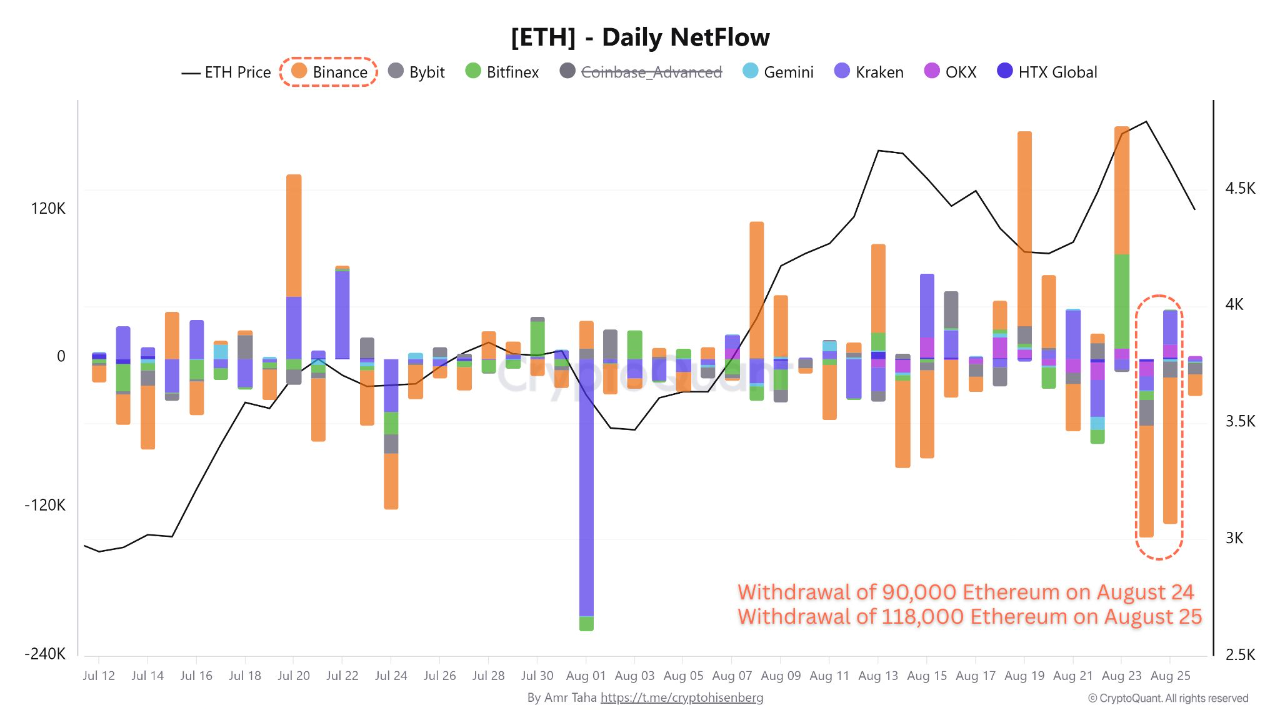
Large withdrawals usually point to a shift toward self-custody and longer holding periods. When coins move to private wallets, they tend to circulate less on order books. Consequently, available supply thins, and prices can react more to fresh bids. This pattern has repeated in prior cycles and remains a basic input for traders who monitor exchange reserves.
The timing aligns with a rotation narrative
Professional trader Willy Woo reports that daily net flows into ETH have approached $900 million, nearly matching recent BTC inflows. Moreover, he ties the latest step-up to BitMine’s treasury program. The firm began accumulating ether on July 8 and, by its disclosures, now holds about 1.7 million ETH. That stock does not trade day to day, which further reduces liquid supply.
Institutional accumulation and lower exchange balances often reinforce each other. Additionally, staking and fee burns remove coins from near-term float. Together, these forces can set a floor under prices if demand persists. However, they do not guarantee a straight line up. Sharp moves in broader markets, or large holders taking profits, can refill exchange balances and mute the effect.
Exchange reserves are falling, self-custody is rising, and treasuries are adding exposure. If inflows continue while supply remains tight, ETH can find support on dips and build pressure on resistance. If those inputs fade, the market will reset expectations. In short, positioning—not headlines—will decide the next leg.




